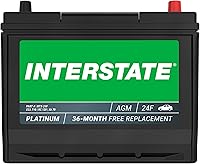
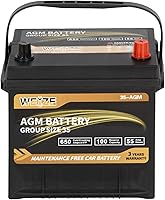
Is a Marine Battery an AGM Battery?
A marine battery is not always an AGM battery. Marine describes where the battery is used, while AGM describes how it is built, so a marine battery can be flooded lead acid, AGM or gel.
On this page (9 sections)
- What is a marine battery, and what is an AGM battery?
- Is a marine battery an AGM battery, or can it be flooded or gel?
- How do you tell whether a marine battery is AGM?
- What are the advantages of an AGM marine battery?
- When is a flooded marine battery the better choice?
- Can you mix AGM and flooded batteries on a boat?
- What charger and maintenance does an AGM marine battery need?
- Which AGM marine battery should you consider?
- So, is a marine battery an AGM battery?
A marine battery is not always an AGM battery. Marine describes where the battery is used, while AGM describes how it is built, so a marine battery can be flooded lead acid, AGM or gel.
The confusion is easy to see. Shops sell "marine batteries" as a category, and some of those units are AGM while others are not.
This guide breaks down the difference and shows how to tell what you actually have in your hand.
What is a marine battery, and what is an AGM battery?
A marine battery is a battery rated for boat use, while an AGM battery is a lead-acid battery built with glass-mat separators. One is a use label, the other is a construction type.
Marine batteries are sold for starting outboard and inboard engines, running trolling motors and house loads, or both. Their case design and terminals often differ from a car battery, but the underlying chemistry can be any of the common lead-acid builds.
AGM stands for absorbed glass mat. In this design the electrolyte is held in a glass fiber mat between the plates, so the battery is sealed and spill-proof.
If that term is new to you, our explainer on what AGM stands for in an AGM battery walks through the build.
So the answer to "is a marine battery an AGM battery" depends on the specific unit. A marine battery may be flooded, AGM or gel, and the label is the only reliable way to know.
Is a marine battery an AGM battery, or can it be flooded or gel?
It can be flooded, AGM or gel, and each one behaves differently on a boat. Flooded batteries are the traditional wet-cell type with removable caps.
AGM batteries are sealed and maintenance-free.
Gel batteries use a thick gelled electrolyte and have their own charging needs.
Many budget marine batteries are flooded lead acid. They are common for starting duties and cost less up front.
AGM marine batteries are popular for trolling motors and house banks because they are sealed and handle vibration well.
Gel batteries are less common but still sold for deep-cycle marine use. They need a charger set to gel, not a generic flooded profile, or the battery can be damaged.
The key point is that "marine" does not tell you the construction. Two batteries on the same shelf labeled marine can be completely different inside.
Check the case label or the printed spec before you buy.
How do you tell whether a marine battery is AGM?
Look at the case label and the printed specification, not the shelf tag. An AGM battery usually says AGM, absorbed glass mat or VRLA somewhere on the case or in the product details.
A flooded battery typically has removable cell caps or vent caps you can unscrew.
A sealed AGM case is not meant to be opened. If you can see round caps that twist off, it's almost certainly flooded lead acid.
If the case is smooth and sealed with no serviceable caps, AGM or gel becomes more likely.
The group size and CCA rating also help. AGM batteries are often sold in specific group sizes like Group 35 or Group 94R.
Our guide to AGM vs lead acid car battery compares the two builds in more detail if you want the full picture.
When in doubt, read the product description or the label on top. A battery sold as AGM will say so, and a flooded battery won't.
What are the advantages of an AGM marine battery?
AGM batteries are sealed, spill-proof and resistant to vibration, which suits boats well. A flooded battery can leak acid if it tips or takes a hard wave, while an AGM holds its electrolyte in a mat and is far less likely to spill.
AGM batteries also handle deep discharge better in many designs. That matters for trolling motors and house banks that get drawn down and recharged regularly.
The sealed build means less maintenance, since you don't top up water.
Cold-cranking performance is another plus. The Mighty Max MM-G35 is a Group 35 AGM rated at 12V, 55Ah and 650 CCA, with a 100-minute reserve capacity.
It's a good example of how an AGM marine or start-stop battery pairs strong starting power with a sealed design.
Weight is the trade-off. The MM-G35 weighs 41 lb, so check the mounting and the boat's weight budget before you swap.
When is a flooded marine battery the better choice?
Flooded batteries win on price and on easy maintenance for people who like to check water levels. They are the traditional choice for simple starting duties where weight and cost matter more than spill resistance.
Flooded batteries tolerate overcharging a little better in some setups and are simpler to diagnose. If a cell goes weak, you can sometimes check it with a hydrometer and top up the water.
That manual routine suits some boat owners.
The downsides are real. Flooded batteries need water checks, can spill acid if tipped, and often have a shorter deep-cycle life than a good AGM.
They also vent gas, so the battery compartment needs ventilation.
For a small boat used on calm water with a simple charging setup, a flooded marine battery is often the practical pick. For a boat that gets knocked around or has hard-to-reach battery boxes, AGM earns its place.
Can you mix AGM and flooded batteries on a boat?
Don't mix AGM and flooded batteries in the same bank. The two types have different charging voltage needs, so one will be undercharged or overcharged when they share a charger.
This matters most for house banks with multiple batteries. If you add an AGM battery to a flooded bank, the charger settings can't satisfy both.
The flooded battery may never reach a full charge, and the AGM may get too much voltage.
If you want to switch a bank from flooded to AGM, replace the whole bank at once. Then set the charger to the AGM profile.
Our guide on can I put an AGM battery in my car covers the same swap logic for vehicles, and the rules carry over to boats.
The starting battery can be separate from the house bank, so you can run AGM for one and flooded for the other as long as each has its own charging path.
What charger and maintenance does an AGM marine battery need?
Use a charger with an AGM setting and keep the terminals clean and tight. AGM batteries are sealed and maintenance-free in normal use, but they still need correct charging voltage to last.
A smart charger that senses the battery type is the safest choice. Avoid older chargers that only have a flooded setting, since they can push too much voltage into a sealed AGM.
The maker's voltage limits are the number to follow.
Check the terminals every few months for corrosion and tightness. Clean them with a battery terminal brush and a light coat of protectant.
Keep the battery box dry and ventilated.
The ANCEL BA101 Car Battery Tester checks 12V batteries including AGM, GEL and flooded types. It reads state of health, state of charge, voltage, CCA and cranking and charging system results.
A quick test before a trip can catch a weak battery early.
For a boat with a hard-to-reach battery, the test is easier than pulling the battery out. It's not a replacement for a load test at a shop, but it gives you a clear picture.
Which AGM marine battery should you consider?
Pick a Group 35 AGM if your boat or vehicle takes that size and you want sealed starting power. The Mighty Max MM-G35 is a 12V 55Ah AGM with 650 CCA and a 100-minute reserve capacity.
It's spill-proof and sealed, so it suits boats that get knocked around.
Mighty Max says the battery is built in an ISO-certified facility and meets CE standards. It can mount in several positions except upside down, which helps in tight battery boxes.
The 41 lb weight is the main thing to check against your mount.
If your boat takes a larger group size or a different terminal layout, match the group size first. Our guide to the AGM truck battery covers larger AGM options if you need a bigger unit for a tow vehicle or a heavy boat.
The ACDelco Gold 94RAGM is a Group 94R/H7 AGM for select vehicles and larger applications. It uses a leak-resistant pressurized valve system and high-density plate construction.
It's a fit for cars and trucks that call for that group size, and the same AGM logic applies if your boat or tow rig takes it.
Confirm the group size and terminal position before ordering, since 94R is larger than Group 35. If your battery box fits a Group 35, the Mighty Max is the simpler match.
So, is a marine battery an AGM battery?
Not always. Marine is a use label, and AGM is a construction type, so you have to check the specific battery.
A marine battery can be flooded, AGM or gel, and each one needs the right charger and care.
If you want sealed, spill-proof power for a boat that takes a Group 35, the Mighty Max MM-G35 is the pick. For a larger vehicle or tow rig that takes a Group 94R/H7, the ACDelco Gold 94RAGM fits.
Add the ANCEL BA101 if you want to check battery health before a trip.
Before you buy, read the label and match the group size and CCA to your engine. If the label says AGM, you have an AGM battery.
If it says flooded or gel, treat it that way and charge it accordingly. For the vehicle side of the swap, see AGM vs lead acid car battery and can I put an AGM battery in my car.
Frequently asked questions
How can I tell if a marine battery is AGM?
Read the case label or the printed specification. An AGM battery usually states AGM, absorbed glass mat or VRLA on the label.
A flooded battery often has removable cell caps, while a sealed AGM case is not meant to be opened.
Can I use an AGM battery as a marine starting battery?
Yes, if the battery's CCA and group size match your engine's requirements. AGM batteries work for starting and for deep-cycle house loads, but the rating on the label has to fit the job you are asking it to do.
Do AGM marine batteries need a different charger?
Yes, in most cases. AGM batteries should be charged with a charger set to AGM or a voltage profile that stays within the maker's limits.
A flooded-battery setting can overcharge AGM and shorten its service life.