Is an AGM Battery Better Than a Flooded Battery?
Yes, an AGM battery is better than a flooded battery for most modern cars, because it holds its charge longer, resists vibration, and never needs water checks. A flooded battery still wins when your car calls for one and you want the lowest-cost basic replacement.
On this page (9 sections)
- What is the difference between an AGM and a flooded battery?
- Is an AGM battery better than a flooded battery for everyday driving?
- Why do start-stop cars need an AGM battery?
- How does vibration resistance compare?
- Does an AGM battery last longer than a flooded one?
- Is a flooded battery ever the better buy?
- Can you swap an AGM for a flooded battery or the other way?
- Which AGM battery should you pick for a replacement?
- So, is an AGM battery better than a flooded battery for you?
Yes, an AGM battery is better than a flooded battery for most modern cars. It holds a charge longer, shrugs off vibration, and needs no water top-ups.
The question of whether an AGM battery is better than a flooded battery comes down to what your car asks for and what you want to spend.
AGM batteries pack their electrolyte into fiberglass mats instead of letting liquid slosh around. That one design change drives almost every advantage below.
A flooded battery still has a place, mostly in simple cars without start-stop or heavy electrical loads.
What is the difference between an AGM and a flooded battery?
An AGM battery holds its acid in glass mats; a flooded battery keeps liquid acid that you can top up. That's the core difference, and everything else follows from it.
In a flooded battery, the plates sit in a bath of liquid electrolyte. You check the water level now and then and add distilled water when it drops.
AGM (absorbed glass mat) batteries suspend the electrolyte in fiberglass mats pressed against the plates. There's nothing to check and nothing to spill.
AGM batteries are sealed and valve-regulated. They can mount in positions a flooded battery can't, including on their side.
Flooded batteries must stay upright so the liquid stays over the plates.
If you want the full breakdown of the chemistry and the names behind it, our guide to what does AGM stand for in an AGM battery walks through the term and the build.
Is an AGM battery better than a flooded battery for everyday driving?
For everyday driving in a modern car, AGM is the better pick. It starts strong in cold weather and holds its charge through short trips that never fully recharge a battery.
AGM batteries recharge faster than flooded ones. The Optima RedTop, for example, lists faster charging capabilities and a 100-minute reserve capacity.
That matters if your commute is short and your accessories draw power the whole way.
Flooded batteries do fine in cars with light electrical demands. A basic sedan without start-stop, heated seats or a big audio system runs on a flooded battery for years.
The gap between the two narrows when the car asks little of its battery.
The real split shows up in start-stop cars. Those systems shut the engine off at lights and restart it constantly.
An AGM battery handles that cycle far better than a flooded one.
Why do start-stop cars need an AGM battery?
Start-stop cars need AGM because the battery takes hundreds of extra engine starts, and flooded batteries aren't built for that cycle count. The car's charging system is also tuned to AGM's faster recharge.
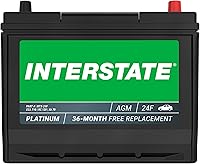
Interstate says its MTX AGM design delivers premium performance for start-stop vehicles and packs more lead into the case. More lead means more reserve for the accessories and plug-ins that run while the engine is off.
A flooded battery in a start-stop car tends to wear out early. The constant deep draws and quick recharges pull water from the electrolyte and stress the plates.
If your car came with AGM, put AGM back in.
Wondering whether your car can take one? Our post on can i put an agm battery in my car covers fit, charging and the checks that matter.
How does vibration resistance compare?
AGM wins on vibration, and by a wide margin. Optima says its SpiralCell design is 15 times more resistant to vibration than a standard flooded battery.
Interstate calls its AGM line vibration resistant too.
Vibration kills batteries by shaking the active material off the plates. In a flooded battery, the liquid acid lets the plates move more freely.
AGM's mats hold the plates tight and cushion the movement.
That's why AGM batteries suit trucks, off-roaders and cars that see rough roads. A flooded battery can handle smooth highway driving for years, but washboard roads and potholes shorten its life.
Does an AGM battery last longer than a flooded one?
Yes, AGM batteries generally last longer, though the gap depends on how you drive. Interstate says its MTX AGM should last about three times as long as a conventional flooded battery.
Optima claims up to three times the life of a standard flooded battery.
The longer life comes from two things. AGM batteries don't lose water to evaporation, so the electrolyte stays at the right strength.
Their tighter plate packs also resist the vibration and shedding that end flooded battery life.
Heat is still the great equalizer. A battery cooked under a hot hood in a warm climate will age faster than one in a cool garage, whatever its type.
Short trips that never recharge it fully also shave years off.
If you want to know where your current battery stands, a tester takes the guesswork out of it. The ANCEL BA101 reads state of health and state of charge and handles flooded, AGM, GEL and EFB batteries.
Is a flooded battery ever the better buy?
Yes, a flooded battery is the better buy when your car calls for one and cost is the priority. It costs less up front and does the job in simple cars without start-stop or big electrical loads.
A flooded battery is also the correct replacement when the car's charging system was designed around it. Older cars charge at voltages that suit flooded chemistry.
Dropping an AGM in without checking can leave it undercharged.
The flooded battery's downside is upkeep. You need to check the water level now and then, and the battery must stay upright.
Its shorter life means more replacements over the years you keep the car.
For a basic commuter with no special demands, a flooded battery is a sensible, honest choice. You give up vibration resistance and some longevity and save money at the counter.
Can you swap an AGM for a flooded battery or the other way?
You can sometimes swap up to AGM, but swapping down to flooded is rarely wise. The safe move is to match what the car was built for, or check before you change types.
Upgrading a flooded car to AGM usually works if the group size and terminals match. The battery may not get the ideal charge profile in an older car, but many drivers do it for the vibration resistance and longer life.
Downgrading an AGM car to flooded is the riskier direction. Start-stop systems and heavy accessory loads are tuned to AGM's recharge speed and reserve.
A flooded battery may not keep up and could fail early.
The Interstate AGM Group 94R (H7) is an 80Ah, 850 CCA AGM built for start-stop vehicles. Its spill-proof VRLA design means no water checks and no leaks if it tips.
Which AGM battery should you pick for a replacement?
Pick the AGM that matches your car's group size and cold cranking amps first, then choose on price and brand. Fit comes before brand loyalty, every time.
Start with the group size stamped on your current battery or in the owner's manual. Then match the CCA rating to your climate: colder starts need more cranking amps.
Terminal layout and hold-down type have to match too.
From there, the field narrows fast. If you're weighing specific brands head to head, our acdelco vs optima battery comparison covers the trade-offs.
For the broader chemistry question, our agm vs lead acid car battery guide lays out the differences in plain terms.
Don't buy an AGM just because it's an AGM. An AGM that's the wrong size or rating is worse than a flooded battery that fits.
So, is an AGM battery better than a flooded battery for you?
For most drivers today, yes: an AGM battery is the better choice, because it needs no water checks, resists vibration and lasts longer. Pick a flooded battery instead if your car was built for one and you want the lowest-cost basic replacement.
The decision rule is simple. If your car has start-stop, lots of accessories or a factory AGM battery, go AGM.
If it's a simple older car with light electrical needs, a flooded battery does the job and saves money.
Whichever way you go, match the group size and CCA rating before you buy. That single step prevents most battery replacement headaches.
For the full picture on both types, our agm vs lead acid car battery guide is the place to start.
Frequently asked questions
Can I put an AGM battery in a car that came with a flooded battery?
Often yes, as long as the group size, terminal layout and cold cranking amps match what your car needs. Check that your charging system is set up for AGM, since some older cars charge at a voltage that suits flooded batteries better.
Do AGM batteries need a special charger?
Yes. AGM batteries charge best on a charger with an AGM setting, because they accept a slightly different voltage curve than flooded batteries.
A standard flooded charger can still top one up slowly, but the AGM mode protects the plates over the battery's life.
How long does an AGM battery last compared with a flooded one?
Interstate says its MTX AGM design lasts about three times as long as a conventional flooded battery. Real service life depends on heat, short trips, and how often the battery runs down, so expect the gap to vary.
Is a flooded battery cheaper to replace than an AGM battery?
Yes. Flooded batteries cost less up front and are the usual fit for basic cars without start-stop or heavy electrical loads.
AGM batteries cost more but ask for less maintenance and usually last longer, so the total cost over several years can come out closer.
Can a flooded battery go where an AGM battery was?
Physically it may fit, but you shouldn't swap down without checking the car's requirements. Cars built around AGM often run start-stop systems and higher electrical loads that a flooded battery isn't designed to handle long term.