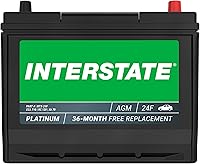
Is an AGM Battery Worth It?
Yes, an AGM battery is worth it when your car came with one or runs stop-start, high electrical loads or heavy vibration. For a basic older car with a flooded battery and no special demands, a conventional battery usually costs less and does the same job.
On this page (9 sections)
- What does AGM mean and why does it cost more?
- Is an AGM battery worth it for stop-start and high-accessory cars?
- Where does AGM actually beat a flooded battery?
- When is a flooded battery the smarter buy?
- How do you check fit before choosing AGM?
- Is an AGM battery worth it if you park outside or drive rough roads?
- Does AGM last longer and cost less over time?
- How do you test whether your current battery is failing?
- So, is an AGM battery worth it for you?
Yes, an AGM battery is worth it when your car came with one or runs stop-start, high electrical loads or heavy vibration. For a basic older car with a flooded battery and no special demands, a conventional battery usually costs less and does the same job.
The honest way to decide is not by chemistry alone. Match the battery type your car was built for, then weigh what AGM adds against what you actually need from the car.
What does AGM mean and why does it cost more?
AGM stands for Absorbent Glass Mat, and the mat is what makes the battery different. A glass fiber mat soaks up the acid instead of leaving it as free liquid, so the battery is sealed and spill-resistant.
Our explainer on what AGM stands for in an AGM battery covers the construction in more detail.
That build costs more to make. The mats and separators are specialized materials, and the sealed case needs tighter manufacturing.
You pay extra for a battery that resists vibration, holds charge longer and handles heat better than a flooded one.
Whether that premium pays you back depends on the car. A stop-start vehicle cycles its battery constantly and needs the deeper cycling AGM provides.
A plain sedan that starts once a morning rarely asks that much of its battery.
Is an AGM battery worth it for stop-start and high-accessory cars?
Yes, for stop-start cars AGM is the right choice, and often the only one that works properly. These systems shut the engine off at lights and restart it constantly, which means many more cycles than a conventional car puts on a battery.
AGM batteries are built for that cycle load. Weize rates its Platinum AGM line at up to 2 times the cycle life of conventional batteries.
The Group 35 version pairs 55AH capacity with 650 CCA and a 36-month warranty, which is the kind of reserve a stop-start car needs.
Cars with big electrical loads also benefit. A luxury sedan with heated seats, a large infotainment screen and driver aids draws more current than a base model.
AGM handles that load and the higher accessory demand without sagging.
If you're unsure whether your car can take the switch, read can I put an AGM battery in my car before buying. The answer depends on the charging system, not just the battery size.
Where does AGM actually beat a flooded battery?
AGM wins on charge retention, heat and cold resistance, safety and vibration. Those are the practical differences, and each one matters more in some cars than others.
Self-discharge is the first. A flooded battery loses charge faster when parked.
Weize cites self-discharge under 8 percent after 90 days of storage on its Group 48 AGM, so a car that sits for weeks keeps more starting power.
Heat and cold resistance is the second. The glass fiber mats and separators in AGM batteries handle extreme temperatures better, so they hold capacity in hot climates and still crank in cold.
That matters if you park outside year-round.
Safety and vibration are the third. Because the acid is absorbed in the mats, there's less risk of leaks and corrosion around the terminals.
The sealed case also resists vibration better, which helps in rough-road and off-road use.
Our comparison of AGM vs lead acid car battery breaks down the trade-offs in more depth.
When is a flooded battery the smarter buy?
A flooded battery is the smarter buy for a simple older car with no stop-start system and no heavy electrical load. It starts the engine, costs less and is easy to find when it fails.
If your car was built with a flooded battery and the charging system is set up for one, an AGM may not get the charging profile it wants. That can shorten its life and erase the advantage you paid for.
Flooded batteries also make sense when the car is a second vehicle used lightly. If the battery rarely gets deeply cycled, the extra cycle life of AGM goes unused.
The one rule to respect: if your car's original battery is AGM, don't downgrade to flooded. Weize notes that a car built for AGM will not accept a flooded replacement.
That's the case where AGM is not optional.
How do you check fit before choosing AGM?
Measure your old battery and match group size, terminal position and cold cranking amps. Those three specs decide fit, and getting them wrong is the main reason a replacement doesn't work.
The Group 35 AGM from Weize measures 9.06 inches long, 6.89 inches wide and 8.82 inches tall, with the negative terminal on the left and positive on the right. The Group 48 version measures 10.94 by 6.89 by 7.48 inches with the same terminal layout.
Compare those against your current battery before ordering.
Cold cranking amps come next. Check your car's minimum CCA requirement and never fit a battery rated lower.
The Group 35 offers 650 CCA and the Group 48 offers 760 CCA, so both cover a wide range of cars and small SUVs.
Finally, confirm the battery type your car expects. If the label on your old battery says AGM, stay with AGM.
Our review of the ACDelco Gold 48AGM shows how to read a specific AGM option against your needs.
Is an AGM battery worth it if you park outside or drive rough roads?
Yes, those are two of the strongest cases for AGM. Heat, cold and vibration are where the construction differences show up most.
An AGM's glass fiber mats handle high underhood temperatures better than flooded plates, so capacity holds up in hot climates. The same build resists cold, so cranking stays reliable when the temperature drops.
For a car parked outside in a place with real seasons, that's a real benefit.
Vibration resistance matters if you drive unpaved roads, tow, or use the vehicle off-road. The sealed, mat-held acid is less affected by shaking than liquid acid in a flooded case.
Weize lists off-road and marine use as suitable applications for its AGM line.
One caution: AGM starter batteries are not deep-cycle batteries. Weize says its automotive AGM line is not suitable for solar projects or marine deep-cycle use, so don't buy one expecting to run a trolling motor or a cabin's power.
Does AGM last longer and cost less over time?
AGM often lasts longer, but the upfront premium means the savings depend on how long you keep the car. Weize rates its AGM line at up to 2 to 3 times the cycle life of flooded batteries.
Treat those as maker claims, not a guarantee.
If you keep a car for 8 to 10 years and the AGM outlasts a flooded battery by a few years, the extra cost can pay back. If you sell in two or three years, the longer life mostly benefits the next owner.
Heat is the wild card. A battery in a hot engine bay ages faster than the cycle-life figure suggests, and that applies to both types.
Parking in shade or a garage helps either chemistry last longer.
Warranty support also affects the value. The Weize Platinum AGM Group 35 and Group 48 both carry a 36-month warranty, which gives you a defined window if the battery fails early.
How do you test whether your current battery is failing?
Test the battery before you spend on a replacement. Many no-starts come from a loose terminal, a tired alternator or a battery that only needed a charge.
A digital tester reads state of health and state of charge in minutes. The ANCEL BA101 handles 12V batteries from 100 to 2000 CCA and supports flooded, AGM, GEL and EFB types.
It shows voltage, CCA and cranking and charging results so you can tell a weak battery from a charging problem.
Enter the battery type, rating and temperature from the label for the most accurate reading. The tester runs off the battery itself, so there's no charging and no internal cells to manage.
It's not for lithium or non-12V batteries, so check yours first.
If the test shows a healthy battery, the problem may be elsewhere. A weak reading on an old battery tells you it's time to shop, and knowing the type you need makes that easier.
So, is an AGM battery worth it for you?
It's worth it if your car came with AGM or runs stop-start, big electrical loads or rough roads. In those cases AGM is the type the car expects, and its charge retention, heat resistance and vibration tolerance earn the extra cost.
It's not worth it if you drive a simple older car with a flooded battery and no special demands. A conventional battery starts the engine for less money and does the job fine.
Use the decision rule: keep the type your car was built for, match group size and CCA, and buy AGM when its advantages apply to how you actually drive. If you're still weighing brands, AGM vs lead acid car battery and can I put an AGM battery in my car will help you finish the call.
Frequently asked questions
Can I swap a flooded battery for an AGM one in an older car?
Often you can if the group size, terminal position and cold cranking amps match, but the charging system has to be compatible. Cars built for flooded batteries may charge an AGM below its ideal voltage, so check the owner's manual and your alternator's output before switching.
Does an AGM battery need a special charger?
Yes, use an AGM-compatible smart charger rather than an old constant-voltage unit. AGM batteries like a charging voltage of about 14.4 to 15.0 volts and can be damaged by overcharging or by the high-voltage modes some flooded-battery chargers use.
How long does an AGM battery last compared with a flooded one?
AGM makers often rate cycle life at up to two to three times that of a conventional flooded battery, though real life depends on heat, charging and how the car is driven. Treat those figures as maker claims and expect several years of service from either type.
Is an AGM battery worth it for a car that sits for weeks?
It can be, because AGM batteries lose less charge in storage than flooded ones. Weize cites self-discharge under 8 percent after 90 days on its Group 48, so a car that sits benefits more than one driven daily.
Do I void my warranty by changing battery type?
Only if the change breaks the car's requirements. If your car's original battery is AGM, fitting a flooded battery is the risky move, since a stop-start system may reject it.
Keep the type the manufacturer specifies and match the group size and CCA.
Should I pay more for AGM if my battery dies in cold weather?
Cold cranking amps matter more than chemistry for a simple no-start in winter. Compare the CCA rating on the label against your car's minimum, and pick AGM only when its other advantages, like charge retention and vibration resistance, also apply to you.