Does an AGM Battery Need to Be Vented?
Yes. An AGM battery still needs ventilation, because its pressurized valve system releases gas under high charge or heat. AGM batteries vent far less than flooded batteries, but the gases they release need a safe path out of the battery box.
On this page (8 sections)
- What does "sealed" actually mean on an AGM battery?
- How does an AGM battery vent gas?
- Does an AGM battery need to be vented in the trunk or cabin?
- What happens if an AGM battery has no vent path?
- How should you vent an AGM battery in a battery box?
- How do you keep an AGM battery from venting too much?
- What should you check before installing an AGM battery?
- The bottom line on venting an AGM battery
Yes. An AGM battery still needs ventilation, even though it's often sold as sealed.
Its pressurized valve system releases gas when internal pressure rises, and that gas needs a safe way out of the battery box.
The confusion comes from the word sealed. AGM means absorbed glass mat, and these batteries are valve-regulated lead-acid (VRLA) types.
They recombine most of the gas they make during normal charging. Under heat or heavy charging, the valve opens and lets some escape.
That's why the answer to "does an AGM battery need to be vented" is a firm yes.
What does "sealed" actually mean on an AGM battery?
Sealed on an AGM label means maintenance-free, not airtight. The battery is built so you never add water.
It still has a vent path built in.
AGM batteries hold the electrolyte in glass mat separators instead of free liquid. During charging, the mats let gas recombine inside the case.
When pressure builds past the valve's limit, the valve opens briefly and releases the excess. ACDelco calls this a leak-resistant pressurized valve system on its Gold AGM models.
So an AGM battery is sealed against spills, not against pressure. That difference matters for how you mount it.
A battery that truly could not vent would be unsafe, because internal pressure would have nowhere to go. The valve is a safety feature, and the vent path outside the battery is the second half of that feature.
How does an AGM battery vent gas?
The valve releases gas in small amounts, mostly during charging. Normal driving produces very little; high heat or overcharging produces more.
AGM batteries vent hydrogen and oxygen, the same gases a flooded battery gives off. The difference is volume.
A flooded battery vents freely and constantly during charging. An AGM battery holds pressure until its valve opens, then closes again.
ACDelco's construction pairs this valve with envelope separators that promote acid circulation and resist shorts.
This is why AGM suits start-stop cars. The low venting fits tighter engine bays and batteries mounted inside the cabin.
It also means the vent path can be small, but it can't be missing. If your car came with an AGM battery, its factory vent design already accounts for this.
Does an AGM battery need to be vented in the trunk or cabin?
Yes, and more carefully there. A battery inside the cabin or trunk needs its gases routed outside the car, not just into the space around it.
Many cars with trunk or under-seat batteries use a vent tube. It's a small hose that clips to the battery's vent port and carries gas through the floor or body.
If the original battery had a tube, the replacement needs one too. ACDelco's AGM models use a vent cap that resists acid leakage, and the 94RAGM has a Marine Terminal fitting.
Skip the tube and gas collects in the cabin. The amounts are small, but the space is enclosed.
If you're changing battery type or location, our guide on whether you can i put an agm battery in my car covers the fit questions that come first.
What happens if an AGM battery has no vent path?
Gas can build up in a closed box and become a fire or pressure risk. The chance is low, but the consequences are serious.
Hydrogen is flammable in the right concentration. A sealed battery box with no outlet traps whatever the valve releases.
In a tight compartment, that turns a minor venting event into a hazard, especially if a spark is nearby.
The box itself can also suffer. Pressure from vented gas escapes wherever it can, often through seals or wiring grommets.
A vented lid or a tube is cheaper than repairing corrosion later. For comparison with older battery designs, read agm vs lead acid car battery and see why flooded types vent more openly.
How should you vent an AGM battery in a battery box?
Give the box a high and a low opening, or use the battery's vent tube. Gas is lighter than air, so the top opening does most of the work.
Start with the vehicle's own design. Most engine bays already have airflow and are not sealed, which is enough for a vented AGM battery in the original location.
A closed marine-style battery box needs a vent kit or a tube routed outside. Fit the tube to the battery's vent port, keep it clear of kinks, and don't cap it.
Check the fit before you buy. Group sizes differ in height, terminal layout and vent points.
Our guide on what size battery does my car need explains how to match the group size to your car.
Which AGM batteries suit a vented engine bay?
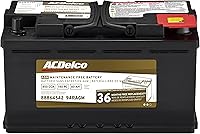
The ACDelco Gold 94RAGM is a Group 94R/H7 battery for select Audi, Buick, Cadillac, Mercedes-Benz, Chevrolet, Jeep and GMC models. Its pressurized valve system and leak-resistant vent cap make it a natural fit in a factory engine bay.
ACDelco backs it with a 36-month, unlimited-mile parts warranty.
The ACDelco Gold 51RAGM is a smaller Group 51R battery built around the 2019-2022 Honda Insight. The same valve and vent cap design applies, in a compact case for a tight bay.
Its 36-month warranty matches the larger model.
Which AGM battery suits start-stop cars with high electrical loads?
The Daakmax Platinum AGM Group 35 is rated at 12V, 55Ah, 650 CCA and 100 minutes reserve capacity. Daakmax says it's built for start-stop vehicles and delivers up to twice the cycle life of conventional batteries.
It's a Group 35 case with tapered terminals and a leak-proof, non-spillable design.
One caution from Daakmax: this is a starting battery, not a deep-cycle one. It's not meant for solar or marine use.
Match the group size, terminal position and CCA to your original battery before you install it.
How do you keep an AGM battery from venting too much?
Keep it cool and charge it correctly. Most excess venting comes from heat and overcharging, not normal use.
Mount the battery away from exhaust heat and direct sun where the car allows it. Check that the charging system matches the battery type; AGM batteries want a slightly different charge profile than flooded ones.
A charger with an AGM setting is safer than a fast charge on a generic setting.
Clean terminals and keep connections tight. Loose terminals cause resistance and heat, which pushes the battery harder.
If you smell a sulfur or rotten-egg odor, stop and have the charging system checked. That smell means the battery is venting heavily and something is wrong.
What should you check before installing an AGM battery?
Check the vent port, the group size and the hold-down. Those three items decide whether the install is safe and whether the battery stays put.
Confirm the replacement battery has a vent port that matches your car's tube, or that the bay has open airflow. Verify the group size against your original battery, including terminal position.
Check the hold-down clamp fits the new case; AGM batteries are often heavier than the flooded unit they replace.
Weight matters for handling. The 94RAGM weighs 53.2 lb and the 51RAGM weighs 32 lb.
Plan the lift, and don't carry a battery by its terminals. If the fit is unclear, look up your car's original group size first and compare it to the battery's listed dimensions.
The bottom line on venting an AGM battery
So, does an AGM battery need to be vented? Yes.
It vents less than a flooded battery, but its valve still releases gas under heat or high charge, and that gas needs a way out. Treat "sealed" as "spill-proof and maintenance-free," not "airtight."
For most drivers, the factory engine bay is enough ventilation. Cars with trunk or cabin batteries need the vent tube connected.
Closed battery boxes need a vent kit or a tube routed outside. Pick a battery with a proper vent cap and valve system, match the group size, and keep the charging system healthy.
If you're deciding between AGM and a conventional battery, start with the fit question and work outward. A vented AGM battery in the right location is the safer, longer-lasting choice for modern cars.
Frequently asked questions
Is an AGM battery completely sealed?
No. AGM batteries are called sealed, but they have a pressurized valve system that opens under high pressure.
That valve is why they are valve-regulated lead-acid batteries and why they still need a vent.
Can an AGM battery explode if it isn't vented?
It can, in theory, if vented gases build up in a closed space and meet a spark. The risk is low because AGM batteries vent little, but a sealed box with no vent path removes the safety margin.
What is a VRLA battery?
VRLA stands for valve-regulated lead-acid. The battery recombines most gases internally and uses a pressure valve to release what it can't absorb.
AGM is the most common VRLA type in cars.
Does a vented AGM battery need a vent tube?
Some AGM batteries have a vent tube connection, often because they sit inside the cabin or a sealed compartment. If your battery or the original one had a tube, connect the new battery's vent to it.
Where should an AGM battery be installed?
In a spot with airflow and a vent path, such as the engine bay or a battery box with a vent. Avoid airtight compartments unless the battery's vent tube routes gases outside.