What Size Battery Does My Car Need?
Use the battery group size specified for your car, then confirm the case dimensions, terminal positions, battery type, and minimum cold cranking amps (CCA). Check your owner's manual or the label on the battery currently installed.
On this page (8 sections)
- What size battery does my car need?
- How do you find your car's battery group number?
- What else should you check besides group size?
- Do group sizes tell you the battery's power?
- Which battery examples match common group sizes?
- Can you install a battery with a different group size?
- What should you do before buying a replacement?
- How do you choose the right battery size for your car?
Use the battery group size specified for your car, then confirm the case dimensions, terminal positions, battery type, and minimum cold cranking amps (CCA). Check your owner's manual or the label on the battery currently installed.
The right battery needs to fit the tray and connect correctly, while meeting your car's starting and charging requirements. A familiar group number alone doesn't confirm every part of that fit.
What size battery does my car need?
Your car needs the BCI group size specified in its owner's manual or confirmed for its exact year, make, model, trim, and engine. The group number helps identify the battery's case size and terminal layout.
Start with the manual. If you don't have it, look for a group number on the battery currently installed, then verify that it matches your car's requirements.
A previous owner may have fitted the wrong battery, so don't rely on that label alone.
The battery tray, hold-down, cable reach, and terminal positions all matter. Also check the battery type and the minimum CCA your car requires.
For a closer look at group numbers, see our guide to car battery group sizes. If you want to check a specific vehicle, use our vehicle battery fit guide.
How do you find your car's battery group number?
Check the owner's manual first, then compare its required group number with the battery installed in your car. A parts store or reliable vehicle fit guide can help confirm the match.
Before you ask for help, write down your vehicle's year, make, model, trim, and engine. Some versions of the same model can call for different batteries, so “same car” may not be enough to confirm fit.
If the current battery's label is worn or missing, don't guess from its shape. Use the vehicle details and confirm the required group, battery type, dimensions, terminal layout, and minimum CCA.
What if the old battery's group number doesn't match?
Pause and verify the fit before replacing it. The battery already in the car may be an incorrect replacement, and copying it could repeat the mistake.
Compare its dimensions and terminal positions with the vehicle requirement. If they differ, ask a qualified parts professional or mechanic to confirm which group your exact vehicle needs.
What else should you check besides group size?
Confirm the physical fit, terminal layout, battery type, and CCA as well as the group number. These details help prevent fit, connection, and starting problems.
Measure the old battery's length, width, and height if you need to compare dimensions. Check that the terminals sit on the correct sides and that the cables reach without stretching or crossing.
Then confirm the battery type. Cars designed for AGM batteries may need another AGM replacement, especially when stop-start features are involved.
Follow the vehicle maker's instructions if you are considering a different type.
Finally, check the minimum CCA in your manual. Our guide to how many cold cranking amps your car needs explains why that number is separate from group size.
Do group sizes tell you the battery's power?
No. Group size is about the battery's case and terminal arrangement; CCA measures starting power in cold conditions.
Two batteries that share a group size can still have different power ratings or battery types.
Choose a battery that meets your car's minimum CCA. A larger CCA number alone doesn't make a battery compatible if its case, terminals, or chemistry aren't right for your vehicle.
Reserve capacity is another separate measure. It describes how long a fully charged battery can provide a set amount of power if the charging system stops working.
Check your manual for any reserve capacity requirement.
Can you choose a battery with higher CCA?
A higher CCA can be suitable if the battery also meets the correct fit and type requirements. Don't use a higher number to overlook the group size, terminal layout, or vehicle maker's instructions.
Cold weather makes starting power especially relevant. If you are comparing batteries, check the minimum CCA for your car and how each option's rating compares.
Which battery examples match common group sizes?
These examples show four group sizes, but they aren't universal fits for every car. Use them only after your manual or a reliable fit check confirms the right group and battery type.
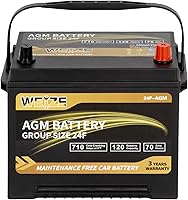
A 24F battery is one option to consider when your car calls for Group 24F and AGM. The Weize Platinum AGM Group 24F measures 10.75 x 6.81 x 8.98 inches and has tapered terminals, with negative on the left and positive on the right.
A Group 35 battery may suit a different vehicle. The Mighty Max MM-G35 is a 12V AGM battery measuring 9.06 x 6.89 x 8.82 inches, with positive on the right and negative on the left.
Group 48 is another possible fit for vehicles that specify it. The Autocessking AGM Group 48 is a 12V battery with 70Ah capacity, 760 CCA, and 120 minutes of reserve capacity.
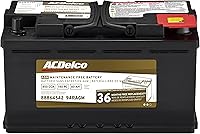
Some vehicles call for Group 94R, also known as H7. The Autocessking AGM Group 94R measures 12.36 x 7.48 x 6.89 inches and has left-negative, right-positive terminals.
Before choosing any battery, match the vehicle's required group, type, CCA, dimensions, and terminal positions. If you're still deciding between options, start with what to know before buying a car battery.
Can you install a battery with a different group size?
Only use another group size if reliable fit information confirms it for your exact vehicle. A different case may not sit securely, clear nearby parts, or let the cables reach the terminals properly.
Don't force a battery into the tray or stretch the cables to reach. A loose hold-down or strained connection can create problems after installation.
If a fit guide offers more than one group, compare each option with the manual and the battery tray. Ask a mechanic or parts professional if the recommendations conflict.
What should you do before buying a replacement?
Verify the group, dimensions, terminal positions, battery type, and minimum CCA before ordering. This short check can catch common fit mismatches while you still have time to compare options.
Use this checklist:
- Find the required group size in the manual or a reliable fit guide.
- Confirm your vehicle's year, make, model, trim, and engine.
- Compare battery dimensions and terminal positions.
- Match the specified battery type, including AGM where required.
- Choose a CCA rating that meets the vehicle's minimum.
- Confirm the hold-down and cable connections can reach safely.
If you can't verify even one of these details, wait to buy until a qualified parts professional checks the fit. For replacement steps and other shopping checks, read car battery replacement: what to know before you buy.
How do you choose the right battery size for your car?
For the right car battery size, use the group number confirmed for your exact vehicle, then verify dimensions, terminal layout, battery type, and minimum CCA. Choose Group 24F, 35, 48, or 94R only if that specific group is approved for your car.
If the manual and current battery label disagree, confirm the fit with a reliable vehicle guide or parts professional before ordering. For more options and fit notes, see our car battery group size guide.
Frequently asked questions
How do I find the right battery size for my car?
Check the owner's manual or the label on the battery installed in your car for its BCI group size. Confirm that the replacement matches the required case dimensions, terminal layout, battery type, and minimum CCA.
If you can't confirm the fit, ask a parts professional to check your year, make, model, trim, and engine.
Can I use a different group size battery?
Use a different group size only if your vehicle's manual or a reliable fit guide confirms it fits and meets the electrical requirements. A case that is too large may not fit the tray, while a different terminal layout can make the cables unsafe or too short.
Confirm before buying.
Does battery group size tell me the CCA?
No. A group number identifies a battery's general physical size and terminal arrangement, while CCA describes its starting power in cold conditions.
Check your vehicle's minimum CCA separately and choose a battery that meets or exceeds it.
Keep the required battery type in mind too.
Can I replace an AGM battery with a regular battery?
If your car came with an AGM battery, keep using AGM unless the vehicle maker confirms another type is suitable. Battery type affects charging needs and vehicle features, including some stop-start systems.
Check the manual or ask a qualified parts professional before switching.