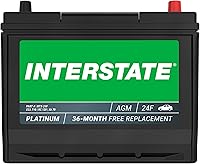
Is an AGM Battery a Gel Battery?
No, an AGM battery is not a gel battery. AGM batteries soak their electrolyte in a glass mat separator, while gel batteries thicken the acid with silica into a paste, so they charge differently and are not interchangeable.
On this page (8 sections)
- Is an AGM battery a gel battery?
- How does AGM battery construction differ from gel?
- Why do people confuse AGM and gel batteries?
- Can you use an AGM charger on a gel battery?
- Which type suits your vehicle or setup?
- What should you check before swapping one for the other?
- How do you identify and maintain each type?
- So, is an AGM battery a gel battery?
No, an AGM battery is not a gel battery. AGM batteries soak their electrolyte in a glass mat separator, while gel batteries thicken the acid with silica into a paste, so the two charge differently and are not interchangeable.
The names get mixed up because both are sealed lead acid designs that never need water added. The difference sits inside the case, and it decides how you charge the battery and whether it suits your vehicle.
Here is what separates them and what to check before you buy.
Is an AGM battery a gel battery?
No. AGM and gel are two separate sealed lead acid designs.
AGM stands for Absorbed Glass Mat, and the acid is held in a fiberglass separator rather than pooling as liquid. Gel batteries take a different route: the electrolyte is mixed with silica so it sets into a thick paste that fills the space between the plates.
Both types recombine gas inside the case during normal charging, which is why neither needs water added. The practical result is that an AGM battery is not a gel battery and you should not treat them as the same product when you buy a charger or a replacement.
They look similar from outside and often share the same case sizes, so the label is the only reliable clue. If you want the full breakdown of the acronym itself, our explainer on what AGM stands for in an AGM battery covers the construction in more detail.
How does AGM battery construction differ from gel?
AGM traps liquid acid in a glass mat; gel suspends it in silica. The separator is the key part, and it changes how the acid moves and how the battery handles charge.
In an AGM battery, a thin glass fiber mat sits between the plates and soaks up the electrolyte like a sponge. The mat keeps the acid in close contact with the active material and leaves small gaps so gas can move and recombine.
The case stays sealed and the battery works in any mounting position except upside down.
A gel battery replaces the liquid with a gelled mix that behaves like a paste. The acid moves more slowly through the thick material, which suits slow, steady discharge better than a sudden burst of current.
That difference shapes what each type is good at.
Why do people confuse AGM and gel batteries?
Both are sealed, spill-proof and sold as maintenance free, so the labels blur for shoppers. The same shelf often holds both types in matching case sizes, and both carry the VRLA (valve regulated lead acid) tag.
That shared language is the source of most of the confusion. A buyer sees "sealed" and "no water needed" and assumes the two are the same.
They are not, and a charger set to the wrong profile can shorten either battery's life. The safest habit is to read the case label before buying anything: look for AGM or Absorbed Glass Mat on one type and Gel or GEL on the other.
Never go by the shape or the color of the case alone.
Can you use an AGM charger on a gel battery?
No, unless the charger has a dedicated gel setting you select. Gel batteries want a gentler charge and a lower float voltage than AGM batteries, and an AGM-only profile can push too much current into the gel.
Most modern smart chargers offer separate AGM and gel modes for this reason. Pick the mode that matches the label on your battery, not the one you used last time.
If the charger only lists AGM, don't assume it suits a gel battery.
The reverse also matters. A charger locked to a gel profile may undercharge an AGM battery, which leaves it short of full capacity over time.
Check the charger's label and the battery's own instructions before you connect anything.
Which type suits your vehicle or setup?
AGM suits engine starting and high current loads, while gel suits deep, slow discharge. That split is the simplest way to pick between them.
Cars, trucks and stop-start vehicles usually call for AGM because it delivers strong cold cranking amps and recovers quickly from a start. It also handles vibration well, which matters in an engine bay.
Our guide on whether you can I put an AGM battery in my car walks through the fit and charging checks.
Gel batteries tend to show up in marine, solar and off-grid setups where the load is steady and the discharge is deep. They tolerate being drawn down slowly and recharge without the high-current demands of a starter motor.
If you are weighing the sealed type against a conventional one, our comparison of AGM vs lead acid car battery covers when the upgrade pays off.
What should you check before swapping one for the other?
Check the vehicle's charging voltage and the battery's mounting first. A swap only works when the charging system, the hold-down and the terminal layout all match the new battery.
Start with the label the vehicle or charger asks for. Some stop-start systems and modern charging setups expect AGM and adjust voltage to suit it.
A gel battery in that spot may not charge correctly.
Then check the physical fit. Group size sets the dimensions and terminal position, so a battery that looks similar may still sit wrong or fail to clamp down.
A Group 35 AGM, for example, is 9.00 x 7.00 x 8.87 inches with positive on the right and negative on the left, and those numbers have to line up with the tray and the cables.
Finally, check the charger you own. If it has no setting for the type you are fitting, budget for one that does.
Getting the charge profile right is the part most people skip.
How do you identify and maintain each type?
Read the case label to identify the type, then keep the terminals clean and the charge topped up. Neither design needs water, so maintenance is about connections and charge level, not topping up cells.
Wipe the terminals now and then to stop corrosion, and keep the battery fully charged when the vehicle sits for long stretches. A sealed battery that runs flat for weeks can sulfate and lose capacity.
Both AGM and gel benefit from the same basic care.
When you want to know the real condition, a tester that supports the type helps. The ANCEL BA101 reads state of health, state of charge, voltage and cold cranking amps, and it works with flooded, AGM, gel and EFB batteries.
Enter the battery type, the CCA or Ah rating from the label and the temperature, and it reports cranking and charging results. It is not for lithium packs or for 6V and 24V systems.
If you prefer a simple load check, the Schumacher BT-100 runs a 100-amp load test on 12V batteries and a 50-amp test on 6V ones. It reads battery health, charging system performance and starter draw from one analog meter.
It handles batteries up to 1,000 cranking amps and covers motorcycle, ATV, lawn tractor, car, boat and RV batteries.
When it's time to replace an AGM battery rather than test it, the Goodyear Platinum AGM Group 35 is a 12V 55Ah unit rated at 650 cold cranking amps. Goodyear says its glass mat build is spill-proof and resists shock and vibration.
It carries a 100-minute reserve capacity and a 36-month warranty, and it ships with mounting screws.
Check the group size and charging profile against your vehicle before ordering, since a gel battery is not a drop-in replacement for an AGM one. For trucks and heavier vehicles, our picks of the agm truck battery options cover higher cranking needs.
So, is an AGM battery a gel battery?
No, and the difference matters when you buy or charge. AGM batteries hold acid in a glass mat and gel batteries thicken it with silica, so each type has its own charging needs and its own best use.
If the question is "is an AGM battery a gel battery," the short answer is that they are two separate sealed designs that are not interchangeable without checking the vehicle. Use AGM for engine starting and high current loads, and look to gel for steady deep discharge.
Read the case label first, confirm the group size and charger setting, then buy the type your vehicle asks for. Getting that right is what keeps either battery working for years rather than months.
Frequently asked questions
Can I charge a gel battery with an AGM charger?
Only if the charger has a gel or AGM setting and you pick the right one. Gel batteries want a gentler charge and a lower float voltage, so an AGM-only profile can overcharge them.
Check the charger's label and the battery's own instructions first.
How can I tell if my battery is AGM or gel?
Read the case label. AGM batteries print AGM, Absorbed Glass Mat or VRLA on the top or side, and gel batteries print Gel or GEL.
The two look similar from outside, so the label is the reliable way to tell before you buy a charger or a replacement.
Are AGM and gel batteries both maintenance free?
Yes, both are sealed designs that don't need water added. AGM batteries keep the acid in glass mats and gel batteries thicken it with silica, and each recombines gas inside the case during normal use.
That sealed build is why neither needs topping up.
Which one lasts longer, AGM or gel?
It depends more on how the battery is used than on the type. Gel batteries handle deep, slow discharges well, while AGM batteries deliver high cranking current for engine starts.
Match the type to the job and charge it correctly, and either can give several years of service.
Can I put an AGM battery where a gel battery was?
Not as a straight swap. Check the vehicle or charger instructions for the type and charging voltage it expects.
An AGM battery needs a charging profile built for AGM, and a system set up for gel may not charge it properly, so confirm before you change types.