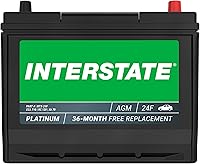
Is an AGM Battery a Lithium Battery?
No, an AGM battery is not a lithium battery. AGM is a sealed lead-acid battery that holds its acid in glass fiber mats, while lithium batteries use a different chemistry and usually a lithium iron phosphate (LiFePO4) design in cars.
On this page (10 sections)
- What does AGM mean and what is inside the battery?
- What makes a lithium battery different from AGM?
- Is an AGM battery a lithium battery in terms of chemistry?
- How can you tell AGM and lithium batteries apart?
- Can you swap an AGM battery for a lithium one?
- Does an AGM battery need a different charger?
- What should you check before buying an AGM battery?
- Which AGM batteries match common vehicles?
- How do you keep an AGM battery healthy?
- So, is an AGM battery a lithium battery or not?
No, an AGM battery is not a lithium battery. AGM stands for absorbed glass mat, a sealed lead-acid design that soaks its acid into fiberglass mats so the battery can be mounted at angles without spilling.
Lithium batteries use a different chemistry and are a separate product category.
The two are easy to mix up because both are sealed and maintenance-free. The confusion costs money when someone charges one type with the other type's charger or tries to swap one for the other without checking the vehicle.
This guide lays out what each battery really is and where the split matters.
What does AGM mean and what is inside the battery?
An AGM battery is a lead-acid battery with the electrolyte absorbed in glass fiber mats. The positive and negative plates are the same lead-based materials used in a flooded battery, and the acid is held in place instead of sitting as free liquid.
That construction is what makes AGM sealed. The mats stop acid from sloshing, so the case can be sealed with a pressure relief valve.
It also lets the battery deliver more cycle life than a flooded battery in many stop-start and accessory-heavy setups.
So when someone asks "is an AGM battery a lithium battery," the honest answer starts with the plates. AGM plates are lead.
Lithium plates are not. If you want the full breakdown of the acronym and the build, see what does AGM stand for in an AGM battery.
What makes a lithium battery different from AGM?
A lithium battery moves ions between a lithium-based cathode and an anode, usually graphite, with no lead plates and no liquid acid bath. In cars and trucks the common version is lithium iron phosphate, sold as LiFePO4.
The chemistry changes the numbers that matter to a buyer. Lithium packs more usable energy per pound, so a lithium battery for the same capacity weighs much less than an AGM.
It also holds a flatter voltage across most of its charge and tolerates deeper discharges without the rapid wear that shortens lead-acid life.
Those traits suit deep-cycle jobs like trolling motors and solar storage. They also come with a higher up-front cost and the need for a charger built for lithium.
An AGM battery is still a lead-acid battery, and it needs a lead-acid charger.
Is an AGM battery a lithium battery in terms of chemistry?
No. AGM is lead-acid chemistry, even though the word "mat" makes it sound modern.
The active materials are lead and sulfuric acid, just arranged in a sealed, spill-resistant package.
Lithium chemistry uses lithium compounds instead of lead. That's the core difference, and it drives almost everything else: weight, charging needs, cycle life and price.
If you remember one thing from this page, remember that AGM belongs in the lead-acid family and lithium is its own family.
Some sellers blur the line by calling AGM "advanced" or "new technology." It's still lead-acid.
For a side-by-side on the lead-acid question, read AGM vs lead acid car battery.
How can you tell AGM and lithium batteries apart?
Read the case label first. AGM batteries print AGM or VRLA on the top or side, and often "lead-acid" in the fine print.
Lithium batteries print LiFePO4 or lithium-ion and usually list a capacity in amp-hours with a much lighter weight.
Weight is the second clue. Pick up a car-sized AGM and it feels heavy for its size.
A lithium battery of similar rating is noticeably light. Voltage behavior is the third clue, though you need a tester to see it: lithium holds a steady voltage until it's nearly empty, while lead-acid sags more as it discharges.
If the label is worn off, look at the terminals and case shape too. Most automotive AGM batteries follow standard group sizes, while lithium starter batteries often use their own case designs.
When in doubt, test before you buy.
Can you swap an AGM battery for a lithium one?
Sometimes, but not as a simple drop-in. A lithium starter battery can work in a vehicle whose charging system and battery management are set up for it.
Many modern cars need a battery registration step after any battery change, and some charging systems don't suit lithium's voltage curve.
The safer move for most drivers is to replace like with like. If your car came with AGM, fit AGM.
If you're weighing the swap in a daily driver, our guide on can I put an AGM battery in my car covers fitment and the registration question.
For trucks that run accessories and stop-start loads, AGM is the usual choice. See the AGM truck battery options if that's your setup.
Lithium makes more sense for deep-cycle use, not for cranking a cold diesel.
Does an AGM battery need a different charger?
Yes. AGM batteries need a charger with an AGM or lead-acid profile, because their charge voltages differ from flooded batteries and from lithium.
A lithium charger can push an AGM battery past its safe voltage and shorten its life.
Look for a smart charger with a selectable AGM mode and a float stage. Avoid old transformer chargers that keep pushing current after the battery is full.
If you're charging in the vehicle, make sure the charger's clamps clear the terminals and the hood can stay open safely.
If your charger only has one lead-acid setting, it's usually fine for AGM as long as it's a modern smart charger. When in doubt, choose the AGM setting and never leave a fast charger connected overnight.
What should you check before buying an AGM battery?
Check three things: the group size your vehicle takes, the cold cranking amps it needs, and whether the car came with AGM from the factory. Group size decides whether the case and terminals fit.
CCA decides whether it starts in cold weather. The original battery type decides whether you should stay with AGM.
If your car's original battery is AGM, staying with AGM avoids a downgrade that the charging system may not accept. If you're not sure, look at the label on the old battery or the owner's manual.
Our guide to AGM vs lead acid car battery explains the cases where AGM is the right call.
A quick health check on the old battery before you shop can save you from replacing one that's still good. A tester that reads CCA and state of health gives you a straight answer before you spend.
Which AGM batteries match common vehicles?
The right AGM battery depends on the group size your car or truck calls for. A group 49 AGM fits select luxury and sports models, while a group 35 AGM covers many mainstream cars and stop-start vehicles.
The ACDelco Gold 49AGM uses high-density plate construction and a pressurized valve system, and ACDelco backs it with a 36-month unlimited-mile parts warranty. Check the group size on your old battery before ordering, since group 49 covers only some Audi, BMW, Mercedes and similar models.
The Weize Platinum AGM Group 35 is rated at 650 CCA and 55Ah, with a 3-year warranty. Its 9.06 by 6.89 by 8.82 inch case uses a tapered terminal layout.
Measure your old battery and confirm the terminal position before you buy, because a group 35 that doesn't match won't fit.
How do you keep an AGM battery healthy?
Keep it charged, keep the terminals clean, and avoid deep discharges. AGM batteries lose capacity when left flat for long periods, so a maintenance charger helps if the vehicle sits for weeks at a time.
Check the terminals for corrosion and tighten them to the maker's spec. Avoid topping up with water, since AGM batteries are sealed and don't take fluid.
If the battery is in a stop-start car, short trips can leave it undercharged, so a periodic longer drive or a smart charger helps.
Test the battery before it fails rather than after. A tester that reads voltage, CCA and state of health tells you whether to keep it or replace it.
That's cheaper than a jump start on a cold morning.
So, is an AGM battery a lithium battery or not?
It is not. An AGM battery is a sealed lead-acid battery, and a lithium battery is a separate chemistry with different charging needs and a much lighter build.
If your car came with AGM, replace it with AGM. If you're shopping for one, match the group size and CCA to your vehicle first.
The practical rule: stay with the chemistry your car was built for unless the maker says otherwise. Check the label, test the old battery, and pick the AGM that fits.
For more on matching a battery to your vehicle, start with what does AGM stand for in an AGM battery and then compare options in AGM vs lead acid car battery.
Frequently asked questions
Can I use a lithium charger on an AGM battery?
No. Lithium chargers push a different charge profile, and using one on an AGM battery can overcharge it.
AGM batteries want a charger with an AGM or lead-acid setting that follows their voltage limits.
Check the charger label before you connect it.
Are AGM batteries better than lithium?
It depends on the job. AGM works well for starting cars and trucks and costs less up front.
Lithium lasts longer in deep-cycle use and weighs much less for the same capacity.
For a normal car or truck, AGM is the practical choice.
How can I tell if my battery is AGM or lithium?
Read the label on top or the side of the case. AGM batteries say AGM or VRLA and are lead-acid.
Lithium batteries say LiFePO4 or lithium-ion and often list a much lighter weight.
The label and the weight are the quickest clues.