How to Test a Car Battery With a Multimeter
To test a car battery with a multimeter, measure its voltage across the battery posts with the engine off, then compare that reading with a rested 12-volt battery's usual range. A voltage check can flag a low charge, but it can't confirm battery health under load.
On this page (6 sections)
To test a car battery with a multimeter, measure voltage across the battery posts with the engine off and compare the result with the usual resting range for a 12-volt battery. This check can show whether the battery is low on charge, but it can't confirm how well the battery will start the car.
Use a digital multimeter set to DC volts. If the battery is low, charge it safely and let it rest before checking again.
How do you test a car battery with a multimeter?
Set the multimeter to DC volts, then touch the red probe to the positive post and the black probe to the negative post. Read the display with the engine and accessories off.
- Park the car, switch it off, and remove the key.
- Turn off lights, climate controls, and other electrical loads.
- Set the meter to DC voltage, choosing a range above 12 volts if it isn't auto-ranging.
- Touch the red probe to the positive (+) battery post.
- Touch the black probe to the negative (–) post.
- Read the voltage and note whether the battery has been resting.
Check the meter manual if you're unsure which setting to use. Keep the probes steady and make sure they don't touch each other while connected to the battery.
You can also touch the probes to clean terminal clamps if the posts are hard to reach, but measuring directly at the posts gives a clearer reading of battery voltage. Don't use the meter's current or resistance setting across the battery.
What does a car battery voltage reading mean?
A rested 12-volt lead-acid battery often reads about 12.6 volts when fully charged. A lower value may indicate partial discharge, but readings vary with battery type, temperature, and how recently the car was driven or charged.
A rough guide for a rested battery is:
- About 12.6 volts: usually fully charged
- About 12.4 volts: partly charged
- About 12.2 volts: more discharged
- Below about 12.0 volts: substantially discharged
Treat these as general guideposts, not a pass-or-fail diagnosis. A surface charge after driving or charging can make voltage appear higher for a while, so let the battery rest before relying on the measurement.
If the reading is low, recharge the battery according to its manual and retest after it rests. If it quickly drops again, or the car still cranks slowly, have the battery and charging system checked.
Our guide to signs of a bad car battery explains symptoms that call for further diagnosis.
Can you check the alternator with a multimeter?
A multimeter can give a basic indication of charging voltage while the engine runs, but it doesn't replace a full charging-system test. Follow the vehicle manual and keep clear of moving engine parts.
First record the battery's resting voltage. Then, if the manual permits, start the engine and measure across the battery posts again.
The voltage should generally rise as the charging system operates, but the expected range depends on the vehicle and its charging strategy.
Modern vehicles can vary charging voltage based on battery condition, temperature, and electrical demand. One reading may not reveal an intermittent fault, so don't condemn the alternator based only on a single number.
Keep loose clothing, hair, meter leads, and hands away from belts and fans. If the engine bay is cramped or the reading is unclear, have a shop test the battery, starter, and charging system.
How is a multimeter check different from a battery tester?
A multimeter measures voltage, while a battery tester can assess additional battery and system information. Use voltage as a quick check, then seek a more complete test when the result or starting behavior raises concern.
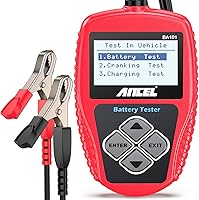
The Ancel BA101 Battery Tester reports state of health, state of charge, voltage, current, and CCA, and includes cranking and charging-system tests. It supports several 12-volt battery types, but it isn't for lithium batteries or non-12-volt batteries.
A battery tester still needs the correct battery type and rating entered for a useful result. Follow its instructions and the battery label.
What should you do if the reading is low?
Charge the battery safely, let it rest, and measure it again before deciding it needs replacement. If the voltage falls again or the car continues to start slowly, arrange a battery and charging-system test.
Check for obvious issues such as loose or corroded connections, but don't disconnect cables unless you know your vehicle's procedure. Some vehicles need specific steps to preserve settings or avoid electrical problems.
A battery that won't hold charge may be worn, damaged, or affected by a charging fault. For more clues, see how long AGM car batteries last and how to read a car battery date code.
Which battery tester can check more than voltage?
Choose a tester that matches your battery voltage and type and offers the checks you need. Some handheld tools include cranking and charging-system tests in addition to battery readings.
The VDIAGTOOL BT500 Battery Tester supports 6V, 12V, and 24V batteries, with readings for voltage, resistance, state of health, and state of charge. It also offers cranking and charging-system analysis, but it isn't for lithium, deep-cycle, or golf cart batteries.
The Topdon BT200 Battery Tester checks 12V and 24V batteries and includes battery, cranking, and charging tests. It supports flooded, AGM, GEL, and deep-cycle batteries.
Check each tool's compatibility and follow its instructions. A tester's extra features don't remove the need to enter the right battery settings or to investigate a persistent starting problem.
When should you get a professional battery test?
Get further testing if the battery is swollen, cracked, leaking, repeatedly loses charge, or the car still struggles after charging. Stop using a damaged battery and keep sparks or flames away.
A voltage reading can't show every fault inside a battery or distinguish every battery problem from a starter or charging-system fault. A shop can run tests under load and check the vehicle's charging system.
If your car needs a new battery, confirm the correct fit before buying. Start with what size battery your car needs and compare battery reserve capacity if you want to understand another battery rating.
How to test a car battery with a multimeter: what to remember
For how to test a car battery with a multimeter, measure resting voltage at the posts with the engine off, then treat the result as a first check. A rested reading near 12.6 volts often indicates a full charge, while a lower value may call for charging and another measurement.
If the reading remains low or starting trouble continues, use a compatible battery tester or ask a shop to test the battery and charging system. Choose a multimeter for simple voltage checks, and a battery tester when you need additional diagnostic readings.
Frequently asked questions
What voltage should a car battery show on a multimeter?
A fully charged 12-volt lead-acid car battery often reads about 12.6 volts after it has rested, though temperature, battery type, and recent charging affect the result. A lower reading can mean it needs charging or further testing; voltage alone does not prove the battery is healthy.
Do I test a car battery with the engine on or off?
Measure resting battery voltage with the engine off and electrical accessories off. A separate charging check can measure voltage while the engine runs, but keep hands, clothing, and meter leads clear of belts and fans, and follow your vehicle manual.
Can a multimeter tell if a car battery is bad?
A multimeter can show battery voltage and help identify a low charge, but it cannot fully assess how the battery performs under load. If the reading is low or the car still struggles to start after charging, get a proper battery and charging-system test.
Is it safe to test a car battery with a multimeter?
Yes, if you use the meter's voltage setting, keep the red lead in the voltage jack, and place the probes across the correct battery posts without letting them touch each other. Wear eye protection, avoid sparks and flames, and don't test a cracked, leaking, or swollen battery.