How Long Do AGM Batteries Last in a Car?
AGM car batteries often last about 3 to 5 years, but heat, short trips, charging problems, and vehicle use can shorten that span. Check your owner’s manual and battery condition rather than relying on age alone.
On this page (8 sections)
- How long do AGM batteries last in a car?
- What affects AGM battery life?
- Does an AGM battery last longer than a flooded battery?
- What signs suggest an AGM battery is nearing the end?
- How do you check an AGM battery's condition?
- Which replacement AGM batteries suit common needs?
- When should you replace an AGM car battery?
- How can you help an AGM battery last longer?
AGM batteries in cars often last about 3 to 5 years, though heat, short trips, charging faults, and heavy electrical use can shorten their life. Use that range as a planning guide, then check the battery's condition and your vehicle's charging system.
The right replacement interval depends on the car and how you drive it. A battery that is several years old may still start reliably, while one exposed to repeated deep discharge or poor charging can fail sooner.
How long do AGM batteries last in a car?
Plan for roughly 3 to 5 years from an AGM car battery. Climate and driving conditions can shift that range, so inspect and test the battery instead of replacing it by age alone.
AGM stands for absorbed glass mat. The electrolyte is held in a glass mat separator rather than freely flowing inside each cell.
This design supports high cycling and charge acceptance. Those features can suit start-stop vehicles and cars with higher electrical demands, but they don't make a battery immune to wear.
Heat can speed battery aging. Repeated short drives may also leave too little time for the alternator to replace the energy used to start the engine, especially when accessories draw power between trips.
Use the date code to estimate a battery's age, but don't treat it as a health test. Our guide to reading a car battery date code explains how to find the code and interpret it.
What affects AGM battery life?
Temperature, charging, trip length, and electrical demand all affect AGM battery life. A healthy charging system and a battery matched to the vehicle help avoid unnecessary strain.
High under-hood temperatures can wear a battery faster over time. Long periods of very cold weather can make starting harder and expose a battery that has already weakened.
Frequent short trips may not fully recharge the battery after each start. If a car sits unused for long stretches, small electrical draws can also reduce charge; repeated discharge can shorten service life.
A charging system that runs too high or too low can damage battery performance. Have the alternator and related charging components checked when a replacement battery weakens unusually fast or the battery warning light comes on.
Accessories matter too. Audio equipment, heated features, and other electrical loads can ask more of a battery, particularly when the engine is off.
Choose the battery type and capacity that the vehicle manufacturer specifies rather than assuming any AGM battery will work.
Does an AGM battery last longer than a flooded battery?
An AGM battery can last longer in some applications, but it is not a guaranteed upgrade for every car. Its cycling and charge-receptive design may suit vehicles with start-stop systems or higher electrical demands.
The expected benefit depends on the car's charging setup, driving pattern, and battery requirements. Using a battery type the vehicle does not support can cause charging or fit issues.
Before changing battery type, check the owner's manual and the current battery specifications. Our guide to AGM versus lead acid car batteries explains the key design differences, and whether you can put an AGM battery in your car covers compatibility questions.
What signs suggest an AGM battery is nearing the end?
Slow engine cranking and repeated jump starts are common reasons to check a battery. Dim lights, electrical resets, or a battery warning light can also point to a problem, but other parts of the charging or starting system may be involved.
A battery that starts the engine one day and needs a jump soon after deserves attention. Don't keep relying on jump starts without checking the battery and charging system, since the battery may not be the only cause.
Look for a swollen case, cracks, or signs of leakage, and follow the battery maker's safety instructions if you see damage. Keep hands and tools clear of moving engine parts, and avoid sparks near a battery.
Read our guide to signs of a bad car battery and what to do next if starting problems have begun. It can help you decide whether to test the battery or have a shop inspect the vehicle.
How do you check an AGM battery's condition?
Use a battery health test and check the charging system when symptoms appear. A voltage reading on its own does not tell the full story, so follow the test tool and vehicle instructions.
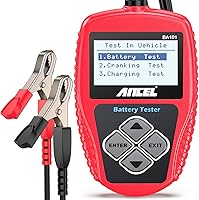
A multimeter can measure voltage, but the reading depends on the battery's state of charge and when you take it. For a fuller check, a suitable battery tester can assess battery health and may also test cranking and charging performance.
The TOPDON BT100 tests 12V lead-acid batteries, including AGM flat plate and spiral types, and reports health, charge, voltage, and other readings.
Follow the tester's instructions and enter the battery rating it requests. If a result is unclear or symptoms continue, ask a repair shop to check the battery and charging system.
For a basic voltage check, see how to test a car battery with a multimeter. Testing the charging system helps separate a weak battery from a charging issue that could affect a replacement too.
Which replacement AGM batteries suit common needs?
Choose a replacement by the vehicle's required type, size, terminal layout, and starting needs. The examples below have different group sizes, so they are options only when the vehicle calls for a compatible battery.
The ACDelco Gold 48AGM is a Group 48/H6 battery for select vehicle makes and models. ACDelco describes its AGM battery design as suited to start-stop applications.
The Weize Platinum AGM Group 94R is an 80 Ah, 850 CCA battery with a 140-minute reserve capacity rating. Check dimensions and terminal position against your vehicle before choosing it.
The Optima RedTop 34/78 has dual SAE and GM terminals, an 800 CCA rating, and a 100-minute reserve capacity rating. Confirm that the case and terminal layout fit your vehicle.
Do not choose based on lifespan claims alone. Verify the required group size, battery type, minimum CCA, and terminal arrangement in the owner's manual or a trusted fit guide.
When should you replace an AGM car battery?
Replace an AGM battery when it fails an appropriate test, cannot hold charge, or repeatedly leaves the car unable to start. A battery's age is a reason to pay closer attention, not proof that it has failed.
If the battery tests weak, confirm that the charging system is working before fitting a new one. Otherwise, the same problem could reduce the life of the replacement.
Check your car's manual for battery replacement steps and any required registration or reset procedure. If you are comparing options, car battery replacement: what to know before you buy covers fit and selection basics.
How can you help an AGM battery last longer?
Keep the battery charged, address charging problems, and avoid leaving the car unused for long periods without a plan. Regular checks can catch corrosion, loose connections, or charging faults before they create starting trouble.
Keep terminals clean and secure, using the vehicle manual's instructions. If the car sits for weeks at a time, ask a qualified technician whether a compatible battery maintainer is appropriate for your vehicle.
When choosing a replacement, follow the vehicle's specified battery type and size. Pick an AGM only when the vehicle supports it, then confirm its terminal layout and ratings before installation.
For an AGM battery in a compatible vehicle, use 3 to 5 years as a rough planning range and check condition as it ages. If it cranks slowly or fails a test, investigate both the battery and charging system before you buy another one.
Frequently asked questions
How long do AGM batteries last in a car?
Many AGM car batteries last about 3 to 5 years, but there is no fixed lifespan for every vehicle. Heat, frequent short trips, long periods parked, accessory use, and charging system problems can shorten service life.
Check the battery and charging system if starting becomes slow or the battery struggles to hold charge.
Do AGM batteries last longer than regular car batteries?
An AGM battery may last longer than a conventional flooded battery in some vehicles, especially when the vehicle needs the AGM design's cycling ability. That does not guarantee a longer life in every car.
Climate, charging, fit, and driving patterns matter, so compare the battery type your vehicle requires and monitor its condition.
Can a car battery last 10 years?
A car battery can sometimes remain in service for many years, but 10 years is beyond the common 3 to 5 year planning range for an AGM battery. Age alone cannot confirm whether it is safe or reliable.
Have a weak or frequently discharged battery checked, and replace it if it fails a suitable test.
How can I tell if my AGM battery is failing?
Slow cranking, dim lights, electrical resets, or repeated need for a jump can point to a weak battery, though charging or starter problems can cause similar symptoms. A battery health and charging system test can help narrow it down.
Check the battery manufacturer's instructions before selecting a test method.