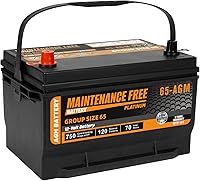
Is an AGM Battery Sensitive to Overcharging?
Yes. An AGM battery is more sensitive to overcharging than a standard flooded battery, because its sealed case cannot be topped up with water. Excess charging dries out the glass mat, and that damage cannot be reversed.
On this page (7 sections)
- Why are AGM batteries more sensitive to overcharging?
- What charging voltage is safe for an AGM battery?
- What are the warning signs of an overcharged AGM battery?
- How do you test an AGM battery for overcharge damage?
- How do you charge an AGM battery without overcharging it?
- How do you choose the right AGM battery for your vehicle?
- What should you do if your AGM battery is already overcharged?
Yes. An AGM battery is more sensitive to overcharging than a standard flooded battery, because its sealed case cannot be topped up with water.
Excess charging dries out the glass mat, and that damage cannot be reversed.
That is the short answer to whether an AGM battery is sensitive to overcharging. The rest of this guide covers the voltages involved, the warning signs to watch for, and how to set up a charger so the battery lasts.
Why are AGM batteries more sensitive to overcharging?
AGM batteries are more sensitive because they are sealed and use a glass mat to hold the electrolyte. A flooded battery can lose water through normal charging and be refilled, but an AGM cannot.
Inside an AGM, the acid is absorbed into a fine glass mat pressed against the plates. When charging pushes too much current in, the water in that electrolyte breaks down into gas.
The mat can recombine some of it, but only so much.
Once the recombination limit is passed, pressure builds and the sealed vents release gas to the outside. That lost water never comes back.
The mat dries, the plates lose contact with the electrolyte, and internal resistance rises.
The result is a battery that still reads a normal voltage when resting but cannot deliver its rated cold cranking amps. A voltage-only test can miss it, so a load test is the better check.
What charging voltage is safe for an AGM battery?
The safe window for most AGM batteries is 14.4 to 14.7 volts during absorption charging, with a float charge around 13.2 to 13.8 volts. Check your battery maker's own figures first.
These ranges are for a battery at normal room temperature. A cold battery accepts a slightly higher voltage, and a hot battery needs a lower one.
Many smart chargers adjust for this, but cheap chargers often do not.
The number that matters most is the absorption voltage. If your charger holds a flooded battery's 14.8 to 15 volts, it is too aggressive for AGM.
A charger with a dedicated AGM mode drops the top voltage and limits current so the mat has time to absorb the charge.
Temperature matters as much as voltage. Charging a hot AGM battery at a high voltage speeds up water loss, so let a battery cool after heavy use before putting it on the charger.
How do you know your charger is set to AGM?
Look for an AGM or "gel/AGM" mode on the charger's display or label, and confirm it is selected before you connect the clamps. Many multi-mode chargers default to flooded, which is the wrong setting for an AGM.
If the charger has no AGM mode, use a lower current setting and watch the voltage with a meter. A simple charger that only has "12V" and no modes is the riskiest option for an AGM.
What are the warning signs of an overcharged AGM battery?
The main warning signs are a hot case, a sulfur smell, visible swelling and water loss from venting. Any one of them means you should stop charging and check the battery.
A battery that feels hot to the touch well after charging finished is a clear signal. Warm is normal during charging, but hot is not.
The smell of rotten eggs means the battery is venting hydrogen sulfide, which happens when it is being pushed too hard.
Swelling is the most serious sign. A swollen AGM case has built up internal pressure and may split.
Stop using it and have it checked by a professional.
Other clues are subtler. A battery that charges quickly and then loses charge fast can be drying out.
So can one that struggles to crank on a cold morning despite a full charge. A load test with a battery tester can show whether the battery still has its capacity.
Can you reverse AGM overcharging damage?
No, you cannot reverse the water loss. Once the glass mat dries out, the lost capacity stays lost, and the usual outcome is a replacement.
A recovery charge might help a lightly sulfated battery that was never badly overcharged. It will not restore a battery that has vented or swollen.
If the case is deformed, stop using it and replace it.
How do you test an AGM battery for overcharge damage?
You test an AGM battery with a load test that measures cold cranking amps against its rating, not just a resting voltage check. A battery can show 12.6 volts and still fail under load.
Start with a visual check. Look for swelling, cracks and electrolyte residue around the vents.
Then run a load test and compare the measured CCA to the rating on the label. A result well below the rating points to a worn or damaged battery.
The Topdon BT200 handles 12V and 24V batteries from 100 to 2000 CCA, including AGM, gel and deep-cycle types. Its charging test checks the alternator output so you can see whether the overcharge is coming from the vehicle itself.
If the charging system is the problem, the BT200's charging test is the quickest way to spot it before another battery is damaged. A reading above the safe voltage window points at the alternator's regulator.
The ANCEL BA101 covers 12V batteries from 100 to 2000 CCA and supports flooded, AGM, GEL and EFB types. Enter the battery type and CCA rating from the label so the state of health reading is accurate.
Both testers give you the data to decide whether the battery is worn out or the charger is at fault. That matters because replacing a battery without fixing an overcharging alternator just repeats the problem.
Why does the alternator matter for AGM overcharging?
The alternator is the most common overcharge source in a running vehicle. If the voltage regulator fails, the alternator can push 15 volts or more into the battery, and an AGM will dry out quickly at that level.
Check the charging voltage with the engine running. A healthy system typically sits around 13.8 to 14.5 volts.
A reading that stays above 14.8 volts for long periods is a warning sign.
How do you charge an AGM battery without overcharging it?
You charge an AGM battery safely by using an AGM-specific charger setting and stopping when the charger says the battery is full. Avoid leaving a basic charger connected for days.
Follow these steps for a safe charge:
- Let a hot battery cool before charging.
- Confirm the charger is set to AGM mode.
- Connect the positive clamp first, then the negative.
- Keep the battery in a ventilated space.
- Disconnect when the charger finishes, and check the case temperature.
A smart charger handles the current taper and float stage for you. A basic charger does not, so it needs close watching.
For a battery in storage, a maintainer with an AGM mode is safer than a full charger left running.
How do you choose the right AGM battery for your vehicle?
The right AGM battery is one that matches your vehicle's group size and CCA requirement and comes from a maker that publishes its charging voltage window. Fit and rating come first.
Check the group size in your owner's manual or on the old battery's label. Then compare cold cranking amps and reserve capacity against what your engine needs.
A battery with too little CCA will struggle in cold weather.
Our guide to the AGM truck battery options covers fit and rating for larger vehicles. For a starting battery with a strong charging profile, the Optima RedTop 34/78 is one option to weigh.
The RedTop 34/78 is a 12V AGM with 800 cold cranking amps, 50 Ah capacity and 100 minutes of reserve capacity. Its dual terminal layout suits vehicles that need either SAE or GM post connections.
It is sealed and maintenance free, so there is no water to top up, which makes correct charging even more important.
Optima says the SpiralCell design is more resistant to vibration than a standard flooded battery and can last up to three times longer. Those claims depend on charging it correctly and keeping the voltage in its window.
If the old AGM has failed from overcharging, recycle it properly. Our guide on how to recycle a car battery covers drop-off options and what to do with a swollen case.
Before buying a replacement, learn how do you identify an AGM battery so you match the type your vehicle expects.
What should you do if your AGM battery is already overcharged?
If your AGM battery is already overcharged, stop charging it, let it cool and have it tested under load. A battery that is hot, swollen or venting should be replaced, not recharged.
Test the charging system before fitting a new battery. If the alternator or charger is pushing too much voltage, the new battery will fail the same way.
Fix the source first.
For a battery that only lost capacity without swelling or venting, a load test will tell you whether it is still usable. A reading close to its rated CCA means it may still serve.
A large shortfall means it is time to replace it.
So is an AGM battery sensitive to overcharging? Yes, and the sensitivity is the reason to set the charger to AGM mode and check the charging voltage.
That one habit protects the battery and saves you a replacement.
Frequently asked questions
What voltage is too high for an AGM battery?
Above about 14.8 volts during charging is too high for most AGM batteries. Absorption charging usually sits at 14.4 to 14.7 volts, and anything past 14.8 starts to push water out of the mat.
Follow the battery maker's own voltage window when you have it.
Can an overcharged AGM battery be repaired?
Usually not. Once the glass mat dries out and the plates sulfate, the lost capacity stays lost.
A recovery charge might bring back a lightly sulfated battery, but a battery that has vented or swollen needs replacing.
Does a smart charger prevent AGM overcharging?
A smart charger with an AGM setting greatly reduces the risk. It lowers the voltage and current once the battery reaches its absorption point, then holds a float charge.
It is not a guarantee, so check the charger's AGM mode is actually selected.
Why does my AGM battery bulge?
Bulging means gas built up inside faster than the case could release it, which points to overcharging or a faulty charger. Stop using the battery and have it checked, because a swollen AGM case can split.