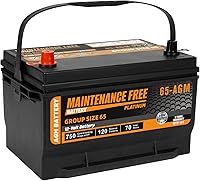
Why Does an AGM Battery Get Hot When Charged?
An AGM battery gets hot while charging mostly because it is being fed more current than its internal chemistry can absorb. Normal charging makes it slightly warm to the touch; hot to the hand, hissing or a swollen case means you should stop charging now.
On this page (8 sections)
- Why does an AGM battery get hot when charged?
- What counts as normal warmth versus too hot?
- What causes overcharging in the first place?
- How does an AGM battery's chemistry make it more heat-sensitive?
- How do you check the charging system and the battery's health?
- When should you stop charging and let the battery cool?
- How do you prevent AGM charging heat going forward?
- The bottom line on AGM charging heat
An AGM battery gets hot while charging mostly because it is being fed more current than its internal chemistry can absorb. Normal charging makes it slightly warm to the touch; hot to the hand, hissing or a swollen case means you should stop charging now.
That split matters. If you're asking why does a agm battery get hot when charged, the answer usually sits in the charger settings or the battery's condition, not in some hidden flaw in AGM design.
AGM (absorbed glass mat) batteries hold their electrolyte in fiberglass mats, so they behave differently from flooded batteries when current flows in. The mat keeps the acid in place and lets gas recombine, but that tight structure leaves little room for error when the charger pushes too hard.
Once the plates are fully charged, incoming current has nowhere useful to go, and the battery starts turning it into heat.
Why does an AGM battery get hot when charged?
Heat comes from energy that isn't being stored. During charging, current pushes lead sulfate back into lead and lead dioxide while releasing oxygen and hydrogen.
In a healthy AGM battery most of that gas recombines internally instead of venting.
When the battery is full but the charger keeps pushing current, that recombination can't keep up. The extra energy turns into heat instead of stored charge.
Charging above the manufacturer's voltage limit, using a flooded-battery charger on an AGM, or charging a battery with a shorted cell all make the same thing happen faster.
AGM batteries are more sensitive to overcharging than flooded ones, so a charger with the wrong profile heats them quickly. A 12V AGM typically wants a lower absorption voltage than a flooded battery of the same size, and a charger that ignores that difference will keep the battery warm long after it should have tapered off.
If your charger has an AGM setting, use it. The chemistry is sealed and maintenance-free, so any heat damage is permanent.
What counts as normal warmth versus too hot?
Mild warmth is expected; real heat is not. A battery taking a healthy charge will feel a little warm on the case, similar to a mug left to sit.
That's the current doing its job.
The warmth should level off as the battery approaches full, not keep climbing.
Here's a practical way to judge. Rest your hand on the case for a few seconds.
If it feels pleasantly warm and you don't want to pull away, you're likely in the normal range. If it's hot enough that you want to remove your hand, stop charging and investigate.
That hand test works on the case itself, not the terminals or the charger body.
Other warning signs to watch for include:
- A case that looks swollen or bulging
- A hissing or bubbling sound near the vents
- A sharp sulfur smell
- The charger itself getting very hot
- Heat that keeps building after the charger should have tapered off
A battery that is merely warm at the start of a charge but cools as it fills is behaving normally. One that gets hotter the longer it stays connected is telling you something is wrong.
What causes overcharging in the first place?
The most common cause is a charger set to the wrong profile or voltage. A standard flooded-battery charger holds a higher absorption voltage than an AGM wants.
Leaving that charger connected after the battery fills keeps feeding it current it can't use.
Other frequent causes include:
- A charger with no automatic shutoff or float stage
- Charging a battery that's already at full charge
- A faulty voltage regulator on the vehicle if you're charging through the alternator
- A battery with an internal short that never reads as full
- Dirty or loose terminals causing the charger to misread state of charge
Temperature matters too. A hot day or a battery sitting in direct sun reduces its ability to shed heat.
Charging in a cool, shaded spot helps, but it doesn't fix a charger set to the wrong profile. A deeply discharged AGM draws a lot of current at the start, which is normal, but that initial warmth should fade as the battery fills rather than build.
How does an AGM battery's chemistry make it more heat-sensitive?
AGM batteries hold their electrolyte in a tight fiberglass mat, which limits how much gas can circulate and recombine. That design is efficient, but it means excess charging current turns into heat faster than in a flooded battery with free liquid.
Flooded batteries can also lose water through gassing. AGM batteries are sealed and can't be topped up, so any overcharge permanently costs them electrolyte and plate material.
A battery that runs hot regularly will have a shorter life than one charged within its limits. The mat itself can dry out and lose contact with the plates, which raises internal resistance and makes the next charge run even hotter.
Our guide on how to maintain an AGM battery covers the charging voltage ranges and care steps that keep heat under control.
How do you check the charging system and the battery's health?
Test voltage first, then load, then the charging output. A multimeter tells you whether the charger is pushing too much voltage.
A load tester tells you whether the battery can still hold up under demand.
Our walkthrough on how to test a car battery with a multimeter shows where to place the probes and what readings to expect. A resting AGM battery should sit around 12.6–12.8 volts when full and at room temperature.
Watch the reading during the charge too, not just before it, so you can see the voltage climbing past the safe range.
A reserve capacity check tells you how long the battery can carry a load before voltage drops. Our explainer on what is a battery reserve capacity covers how that number is measured.
A battery that is already weak internally will often run hot because it can't accept charge efficiently, so testing health before blaming the charger is worth the few minutes.
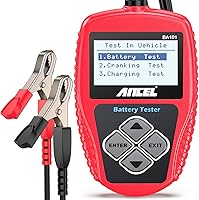
Which battery tester fits your garage?
The Foxwell BT705 covers 12V and 24V systems from 100–2000 CCA and works with flooded, AGM, GEL and EFB batteries. Its screen summarizes results as GOOD, RECHARGE or REPLACE, which helps when you're deciding whether heat damage has already taken a toll.
A 24-month warranty backs it.
The VDIAGTOOL BT500 handles 5–3000 CCA and adds 6V coverage for motorcycle and small-device batteries. Its five-in-one protection covers reverse polarity and short circuits.
Note that it's not rated for lithium or deep-cycle batteries.
The Schumacher BT-100 runs battery, charging and starter tests from one unit. Its analog meter gives quick results, though it won't display internal resistance or state of health numbers the way a digital tester does.
For a quick pass or fail on an older battery, that simplicity is often enough.
When should you stop charging and let the battery cool?
Stop as soon as the case feels hot to the touch, you hear hissing or you see swelling. Unplug the charger, move the battery to a ventilated spot and let it cool to room temperature before doing anything else.
Don't try to "finish the charge" after it overheats. A battery that has vented or swollen has likely suffered internal damage.
In that case, replace it rather than risk a repeat. Sealed AGM batteries that have been overcharged can fail suddenly.
If the battery cools and charges normally on the correct profile afterward, the charger was probably the culprit. Check the charger's voltage setting against the battery maker's spec before using it again.
For a battery that's beyond saving, our guide on how to recycle a car battery covers safe disposal options. Never open a sealed AGM case, since breaking the seal ruins the battery.
How do you prevent AGM charging heat going forward?
Use an AGM-specific charger and keep it off a full battery. A smart charger with an AGM profile, temperature compensation and automatic shutoff removes most of the risk.
Those features separate a modern charger from the old transformer type that just keeps pushing current.
Other habits that help:
- Match charger amperage to battery size; a slow charge generates less heat than a fast one
- Charge in a cool, ventilated space out of direct sun
- Clean terminals before connecting so the charger reads voltage correctly
- Don't leave a charger connected for days on end
- Check battery voltage before charging; skip the charge if it's already full
If the battery sits in a vehicle, make sure the alternator's voltage regulator is working. A faulty regulator can overcharge while you drive, and the heat shows up long before the battery fails.
The Foxwell BT705's cranking and charging tests are built for exactly that kind of check, and the 5.9 ft cable lets one person watch the readings from the driver's seat during startup.
The bottom line on AGM charging heat
A little warmth is normal; real heat means stop and check the charger profile. The fix is usually an AGM setting, a charger that shuts off when full, or a battery that's reached the end of its life.
If the answer keeps pointing at the battery itself, test it before you buy a replacement.
Charge on the right profile, in a ventilated space, and let the battery cool before you reconnect anything.
Frequently asked questions
How warm should an AGM battery get while charging?
It should feel mildly warm, like a mug of tea left for a few minutes. If you can hold your hand on the case without pulling away, that's in the normal range.
A case too hot to touch comfortably is a warning sign.
Can a hot AGM battery explode?
Yes, sealed lead-acid batteries can rupture if overcharging builds too much internal pressure. The risk rises when a faulty charger keeps pushing current into an already full battery.
Stop charging and ventilate the area if you hear hissing or see swelling.
Does a hot charger mean the battery is bad?
Not always. A warm charger often means it is working hard to push current into a deeply discharged battery.
But a charger that stays hot after the battery should be full points to a charger or battery problem worth checking.
Should I let an AGM battery cool before charging again?
Yes. Let it cool to room temperature before you reconnect the charger.
Charging a hot battery adds more heat and speeds up wear inside the plates.
Can I charge an AGM battery in a closed garage?
No. Even sealed AGM batteries can vent gas under overcharge.
Charge in a ventilated space and keep the area away from sparks, flames and flammable items.