9 Best Battery Load Testers for Home Garages (October 2026)
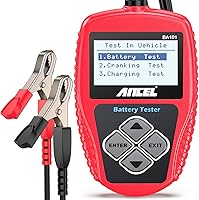
The best battery load testers for home garages include the Topdon BT200 Battery Tester for all-around digital checks, the OTC 3181 130 Amp Load Tester for simple analog load checks, and the Foxwell BT705 Battery Tester for guided multi-vehicle testing.
On this page (6 sections)
The TOPDON BT200 is the best battery load tester for most home garages, because it combines battery, cranking and charging checks in one digital tool. The OTC 3181 is a simpler pick if you want an applied load test and need support for both 6V and 12V batteries.
These testers serve different jobs. A conductance tester gives digital battery health readings, while a carbon pile or fixed-load tester applies a current load that helps assess battery response.
For a basic battery check, a multimeter battery test guide explains what voltage readings can and cannot tell you. You can also read our guide to signs of a bad car battery and battery reserve capacity to understand other clues about battery condition.
Our picks at a glance
-
1

-
2

-
3

- 4
 Check it
Solar 1874 Carbon Pile Load Tester
Best for variable high-current loads - 5
 Best for a mixed 6V and 12V garageCheck it
- 6
 Best for portable 100-amp checksCheck it
- 7
 Check it
VDIAGTOOL BT500 Battery Tester
Best for broad voltage coverage - 8
 Best for basic 6V and 12V checksCheck it
- 9
 Best for variable-load analog testingCheck it
How we chose battery load testers for home garages
We compared each tester's stated voltage coverage, test method, included system checks and readout style. Our score weighs specs, features and buyer feedback against what you're shopping for.
A home garage may need only a straightforward 12V load check, while a household with older equipment or larger vehicles may benefit from 6V or 24V coverage. Digital testers can also make results easier to interpret by displaying battery health, cranking and charging information.
We included fixed-load and carbon pile models for users who want an applied load, along with digital analyzers for broader diagnostics. Check the tester's voltage and battery-type support before connecting it.
| Product | Best for | Battery voltage | Test types | Display | Our score |
|---|---|---|---|---|---|
| Topdon BT200 Battery Tester | all-around digital checks | 12V and 24V | Battery, cranking and charging | 2.4-inch color LCD | 8.6 |
| OTC 3181 130 Amp Load Tester | simple analog load checks | 6V and 12V | 0–16V range with zero adjust | 8.5 | |
| Foxwell BT705 Battery Tester | guided multi-vehicle testing | 12V and 24V | Battery, cranking and charging | 8.4 | |
| Solar 1874 Carbon Pile Load Tester | variable high-current loads | 12V | 8.2 | ||
| Schumacher BT-100 Load Tester | a mixed 6V and 12V garage | 6V and 12V | 7.7 | ||
| NEIKO 40510A Load Tester | portable 100-amp checks | 6V and 12V | 7.6 | ||
| VDIAGTOOL BT500 Battery Tester | broad voltage coverage | 6V, 12V and 24V | Battery, cranking and charging | 7.4 | |
| QWORK 24338 100A Load Tester | basic 6V and 12V checks | 6V and 12V | Battery and alternator | 7.2 | |
| 500A Carbon Pile Load Tester | variable-load analog testing | 6V and 12V | 6.9 |
Best battery load testers for different garage needs
The TOPDON BT200 leads for broad digital checks, while the other picks suit specific battery systems, load styles and garage routines. Choose by the kind of test you expect to perform most often.
Topdon BT200 Battery Tester: Best for all-around digital checks
- 12V and 24V batteries
- Battery, cranking and charging tests
- 2.4-inch color display
- 100–2000 CCA
Digital guided results and multiple system checks make the BT200 a flexible choice for a home garage. It covers several lead-acid battery types and vehicle uses.
Pros
- Tests battery, cranking and charging systems
- Supports 12V and 24V batteries
- Color display with Good or Replace prompts
Cons
- Not a variable-load carbon pile tester
- Does not support 6V batteries
The TOPDON BT200 is a good fit if you want one tool for battery condition, cranking and charging checks. It uses conductance technology and supports 12V and 24V batteries from 100–2000 CCA.
Its 2.4-inch color display gives Good or Replace prompts, which can make results easier to understand than a gauge alone. The tester covers flooded, AGM, GEL and deep-cycle batteries, as well as cars, trucks, RVs, boats and other equipment.
The BT200 is not a traditional carbon pile tester, so choose another style if you specifically want a variable current load. For a garage focused on common digital checks, its broader system diagnosis makes it the most versatile pick here.
OTC 3181 130 Amp Load Tester: Best for simple analog load checks
- 130-amp load
- 6V and 12V batteries
- Top and side post clamps
- Large 0–16 volt display
The OTC 3181 gives home users a direct load test with an oversized voltage display. Its clamps grip top and side post batteries.
Pros
- Supports both 6V and 12V batteries
- 130-amp load test
- On-tool clamp storage
Cons
- Does not provide digital cranking and charging analysis
- Requires interpreting an analog display
The OTC 3181 suits a garage that wants a direct load test without digital menus. It applies a 130A load and works with 6V or 12V batteries.
Its display covers a 0–16 volt range and has zero adjustment. The clamps are designed for top and side post batteries, and the tool includes side tabs for clamp storage.
Choose it for a traditional test workflow and easy-to-read voltage display. If you want automatic battery health summaries or charging analysis, a digital analyzer such as the TOPDON BT200 offers more system checks.
Foxwell BT705 Battery Tester: Best for guided multi-vehicle testing
- 12V and 24V systems
- 100–2000 CCA
- Battery, cranking and charging tests
- 5.9 ft cable
Step-by-step prompts and GOOD, RECHARGE or REPLACE results suit users who want help interpreting readings. Its cable can reach from the battery to the driver's seat.
Pros
- Guided tests and clear result labels
- Includes hard carrying case
- Supports 12V and 24V systems
Cons
- Does not support 6V batteries
- More features than needed for a basic load check
The Foxwell BT705 is a strong option when guided digital testing matters. It checks battery health, cranking performance and charging output on 12V and 24V systems across 100–2000 CCA.
Its 2.8-inch screen gives step-by-step prompts and summarizes results as GOOD, RECHARGE or REPLACE. A 5.9 ft cable can reach from the battery to the driver’s seat, which helps when checking cranking performance alone.
The BT705 works with flooded, AGM, GEL and EFB lead-acid batteries, including start-stop applications. It comes with a hard carrying case, making it easier to keep the tester and accessories together between jobs.
Solar 1874 Carbon Pile Load Tester: Best for variable high-current loads
- Variable load up to 500A
- Tests batteries up to 1000 CCA
- Dual gauges
- Can assess starter and alternator performance
The Solar 1874 uses a variable carbon pile load for users who want adjustable current and analog gauges. Its heavier-duty testing calls for careful attention to the test procedure.
Pros
- Variable load control up to 500A
- Dual gauges
- Can assess starter and alternator performance
Cons
- Limited to 12V batteries
- Bulkier style than a handheld digital tester
The Solar 1874 is for users who want to adjust the applied load by hand. Its carbon pile design offers variable load control up to 500A and tests batteries up to 1000 CCA.
Dual gauges help you observe the test, and the tester can also assess starter and alternator performance. It is a 12V tool, so it is not the right choice for a garage that also needs to test 6V batteries.
A carbon pile test requires more attention to the test procedure than a quick digital check. Choose the Solar if variable load testing is the reason you are shopping.
Schumacher BT-100 Load Tester: Best for a mixed 6V and 12V garage
- 6V and 12V batteries
- 50A load for 6V
- 100A load for 12V
- Battery, charging and starter draw tests
The BT-100 covers several common garage checks on both 6V and 12V batteries. Its analog meter keeps the controls direct.
Pros
- Tests battery, charging system and starter draw
- Supports 6V and 12V batteries
- Works with cars, motorcycles, boats and RVs
Cons
- Analog results require reading the meter
- Not for 24V systems
The Schumacher BT-100 is a practical choice for a garage with both 6V and 12V equipment. It applies a 50A load at 6V and 100A at 12V, and can check battery condition, charging system performance and starter motor draw.
Its analog meter and top-mounted rocker switch keep operation straightforward. The BT-100 is described for cars, motorcycles, ATVs, lawn tractors, boats, light trucks and RVs.
Choose it when you value voltage flexibility and several basic checks in one tool. The analog readout is less guided than the digital screens on the BT200 or BT705.
NEIKO 40510A Load Tester: Best for portable 100-amp checks
- Fixed 100A load
- 6V and 12V batteries
- Analog voltage meter
- Portable handle
The NEIKO 40510A is a compact style of analog load tester with a fixed load for common 6V and 12V batteries. It suits simple checks when a variable load is not needed.
Pros
- Fixed 100A load for 12V batteries
- Supports 6V and 12V
- Protective meter housing and carrying handle
Cons
- Fixed load offers less adjustment
- Test cycle includes a cool-down period
The NEIKO 40510A suits buyers who want a portable fixed-load tester for regular 6V and 12V checks. It uses a 100A load for 12V batteries and a 50A load for 6V batteries.
A protective housing surrounds the analog voltage meter, and the tester has a handle for carrying. The stated voltage accuracy is ±0.2V, with a test cycle that includes a cool-down period.
This is a simple option for a garage that does not need variable load control. Follow the specified test and rest periods, especially if you plan to repeat checks.
VDIAGTOOL BT500 Battery Tester: Best for broad voltage coverage
- 6V, 12V and 24V batteries
- 5–3000 CCA
- Battery, cranking and charging tests
- Supports flooded, AGM, GEL and EFB
The BT500 covers more voltage systems and a wider stated CCA range than the other digital picks here. It does not support lithium, deep-cycle or golf cart batteries.
Pros
- Supports 6V, 12V and 24V systems
- Reports voltage, resistance, SOH and SOC
- Includes cranking and charging tests
Cons
- Not for lithium or deep-cycle batteries
- Not for golf cart batteries
The VDIAGTOOL BT500 has the broadest stated voltage and CCA coverage in this group. It supports 6V, 12V and 24V batteries from 5–3000 CCA, with tests for battery health, cranking and charging.
The digital tool reports voltage, resistance, state of health and state of charge. It supports flooded, AGM flat plate, AGM spiral, GEL and EFB lead-acid batteries.
Check compatibility carefully: the BT500 is not for lithium, deep-cycle or golf cart batteries. Its coverage suits a garage that works across several vehicle types, provided the batteries fit its supported types.
QWORK 24338 100A Load Tester: Best for basic 6V and 12V checks
- 6V and 12V batteries
- Up to 1000 CCA
- Alternator test function
- Steel case and copper-plated clamps
The QWORK combines battery and alternator checks in a compact handled unit. Its stated battery coverage suits common 6V and 12V garage use.
Pros
- Supports 6V and 12V batteries
- Includes alternator testing
- Steel case and copper-plated clamps
Cons
- No digital result summary
- Does not support 24V systems
The QWORK 24338 is a basic fit for 6V and 12V batteries up to 1000 CCA. It combines battery and alternator testing in a compact unit with a steel case and copper-plated clamps.
Its simple design makes sense when you want a direct battery check and an alternator function without a digital result summary. The tool is not specified for 24V systems.
Choose it for common garage voltage needs and straightforward operation. If you want guided readings or a broader CCA range, compare it with the BT200 or BT500.
500A Carbon Pile Load Tester: Best for variable-load analog testing
- Variable load up to 500A
- 6V and 12V lead-acid batteries
- Up to 1000 CCA
- Voltage and amperage meters
This TOPDC carbon pile tester offers variable load control and dual meters for users comfortable with analog checks. Its stated test cycle includes a 1-minute cool-down.
Pros
- Variable load up to 500A
- Supports 6V and 12V lead-acid batteries
- Includes a timer alert
Cons
- Analog gauges need interpretation
- Follow the specified test and cool-down cycle
This TOPDC carbon pile tester gives users variable load control up to 500A for 6V and 12V lead-acid batteries. It is stated for batteries up to 1000 CCA and includes separate voltage and amperage meters.
A built-in timer alerts you after the 15-second test cycle, with a 1-minute cool-down period. The maker also specifies a limit of 3 tests every 5 minutes.
Choose it if you prefer analog meters and adjustable load testing. Its procedure and rest periods make it a more involved choice than a digital tester for occasional battery checks.
What should you check before buying a battery load tester?
Start with the battery voltage and type you need to test. A tester that covers 12V only won't serve a 6V battery, and some digital models exclude battery types such as lithium or deep-cycle.
Next, decide whether you want an applied load or digital conductance results. A fixed-load or carbon pile tool tests battery response under load, while digital analyzers can add cranking and charging checks.
Readout style matters too. Analog gauges give a direct reading but require interpretation, while guided screens can summarize results.
For background on how battery condition affects starting, see our guide to cold cranking amps.
Are carbon pile testers right for a home garage?
A carbon pile tester can suit a garage that needs a variable applied load and has someone comfortable following the test steps. The Solar 1874 and TOPDC 500A models in this roundup provide adjustable load control.
These tools are less suited to someone who wants a quick digital summary. Follow the model's test duration, battery limits and cool-down instructions, and don't repeat load tests beyond the stated cycle.
When should you use a digital battery tester?
A digital battery tester makes sense when you want results beyond a voltage gauge. Models such as the TOPDON BT200 and Foxwell BT705 include battery, cranking and charging checks, while the VDIAGTOOL BT500 also supports 6V systems.
Digital results do not replace checking the vehicle and battery instructions. If a test suggests a weak battery, compare it with symptoms and charging system behavior before deciding to replace parts.
Which battery tester should you choose?
Choose the TOPDON BT200 if you want digital battery, cranking and charging checks for 12V and 24V systems. Pick the OTC 3181 for a straightforward 6V or 12V load test, or the Solar 1874 if variable carbon pile loading is your priority.
If you're considering a replacement, start with our guide to car battery replacement so you can confirm fit and other purchase details before choosing a new battery.
Our top 3 picks at a glance
-
1
-
2
-
3
Frequently asked questions
What is the best battery load tester for a home garage?
The TOPDON BT200 is a strong choice for most home garages because it checks battery health, cranking performance and charging output on 12V and 24V systems. If you want a direct analog load test and also need 6V support, consider the OTC 3181.
Match the tester to your battery voltage and the type of result you need.
What is the difference between a digital battery tester and a load tester?
A digital tester such as the TOPDON BT200 uses conductance technology to report battery and system results. A traditional load tester applies a current load and relies on a gauge or meter to show how the battery responds.
Choose digital prompts for easier interpretation, or a load tester when you specifically want an applied load.
Can a battery load tester damage a battery?
A load test draws current from the battery, so follow the tester's instructions and limits. Some models specify short test periods and cool-down breaks between tests.
Don't repeat tests beyond the stated cycle, and avoid testing a battery that is damaged, leaking or otherwise unsafe to handle.
Can I use a load tester to check the alternator?
Some testers include charging system or alternator checks, including the TOPDON BT200 and Foxwell BT705. A basic load tester may focus on battery response instead.
If the car has starting trouble, compare the battery result with a charging system check before deciding which part needs attention.
How do I know whether my battery needs replacement?
A weak test result can point to a battery that needs charging or replacement, but check the battery's condition and test it as the tool directs. A no-start problem can also involve the charging system or starter.
Our guide to signs of a bad car battery explains symptoms to consider alongside a test.