Can You Charge an AGM Battery With a Regular Charger?
Yes, you can charge an AGM battery with a regular charger, but only if it has an AGM or sealed battery setting and stays within the battery's voltage limits. A basic charger with no AGM mode risks overcharging the battery, so match the charger to the battery type first.
On this page (8 sections)
- What counts as a regular charger for an AGM battery?
- Can I charge an AGM battery with a regular charger that lacks an AGM mode?
- Which charger settings should you use for an AGM battery?
- How do you tell when an AGM battery is fully charged?
- What goes wrong when a regular charger overcharges an AGM battery?
- How does AGM differ from flooded in charging?
- When should you use a charger versus the car's alternator?
- What should you check before charging an AGM battery?
Yes, you can charge an AGM battery with a regular charger, but only when that charger has an AGM or sealed battery setting and stays inside the battery's voltage and current limits. A plain charger with only a flooded profile can push too much current into a sealed battery.
The short version: the charger settings matter more than the label on the battery. This guide covers what "regular" means, which settings to use, and how to tell when the job is done.
What counts as a regular charger for an AGM battery?
A "regular" charger is any charger you already own, from a simple wall-plug unit to a smart bench charger. The key is whether its settings include a sealed or AGM mode.
Older trickle chargers often have a single 12V setting and no battery-type selector. That works for a slow top-up only if the output stays low.
Modern smart chargers usually list flooded, AGM, gel, and sometimes lithium as separate options.
The battery label is your reference. An AGM battery is sealed, so it vents gas internally rather than through removable caps.
That design changes how it handles charge current, which is why a dedicated AGM setting exists on better chargers.
Check the charger's manual for its AGM or sealed mode before connecting anything. If the only option is "12V standard" or "flooded", treat it as a basic charger and use extra care.
Can I charge an AGM battery with a regular charger that lacks an AGM mode?
You can, but only with a slow, low-current charge and close monitoring. A charger with no AGM setting isn't automatically unsafe, yet it gives you less control over voltage.
Set the charger to its lowest current setting and watch the voltage as the battery fills. Stop the charge if the battery gets warm or the voltage climbs past the level printed on its label.
Never leave a basic charger connected overnight without checking.
The risk is overcharging. AGM batteries hold their charge well, so a charger that keeps pushing current after full charge can dry out the glass mat inside.
That damage doesn't reverse, and it shortens the battery's service life.
If your only charger is a fast-charge model built for flooded batteries, use it as a last resort. A short, monitored session beats an unattended one.
For anything regular, a charger with a proper AGM mode is the better tool.
Which charger settings should you use for an AGM battery?
Pick the AGM or sealed mode, then set the current to roughly 10 percent of the battery's amp-hour rating. A 100Ah AGM battery takes about a 10A charge rate as a safe default.
Many chargers handle this automatically once you select AGM. If yours asks for voltage, follow the AGM figure in its manual rather than a flooded-battery number.
AGM batteries generally want a slightly lower charge voltage than flooded lead acid.
Don't mix modes. Charging an AGM battery on a gel setting, or the reverse, can undercharge or overcharge it.
Gel batteries tolerate less voltage still, so the settings aren't interchangeable.
Stop the charge when the completion indicator shows full, or when current drops to a low float level. A charger with a float stage can stay connected longer, but a basic unit should be disconnected once it finishes.
Is it safe to leave an AGM battery on a regular charger overnight?
Only if the charger has a float or maintenance stage that stops pushing current once the battery is full. A basic charger without that stage keeps feeding the battery and can overcharge it.
Set a timer or check the battery before bed. If you need unattended charging, a smart maintainer with an AGM mode is the safer choice for storage and long idle periods.
How do you tell when an AGM battery is fully charged?
Watch for the charger's full-charge light, then confirm resting voltage with a tester. A fully charged 12V AGM battery typically rests around 12.7 to 12.9 volts after it settles.
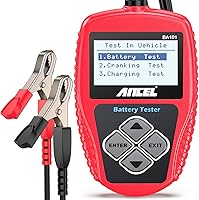
A battery tester gives you more than a voltage number. The ANCEL BA101 reads state of health and state of charge, plus cranking and charging system results, and it supports AGM, flooded, gel, and EFB batteries.
Its readings help you decide whether the battery is actually full or just holding a surface charge.
Let the battery sit for a while after charging before you test it. Voltage right after a charge runs high, so a short rest gives a truer picture.
Our walkthrough on how to test a car battery with a multimeter covers the voltage checks in more detail.
If the battery won't hold a charge after a full session, the problem may be age or internal damage rather than the charger. A load test helps confirm that.
What goes wrong when a regular charger overcharges an AGM battery?
Overcharging dries out the glass mat, raises internal heat, and shortens the battery's life. Because AGM batteries are sealed, you can't top up lost electrolyte with water the way you can on a flooded battery.
Signs include a warm case during charge, a swollen shell, and voltage that stays high after the charger stops. A charger stuck in a fast-charge profile is a common cause.
So is leaving a basic charger connected for days.
Heat is the main enemy. High charge current raises the battery's internal temperature, and sustained heat speeds up the wear that ends a battery's useful life.
That's why a slow, matched charge is safer than a quick one.
If the case looks swollen or the battery gets hot quickly, stop charging and have it checked. Continuing can lead to a venting failure.
Also keep terminals clean and tight, since a poor connection can confuse the charger's voltage reading.
How does AGM differ from flooded in charging?
AGM batteries accept charge faster but tolerate overcharge less, so the charger's profile matters more than it does on a flooded battery. Our comparison of AGM vs lead acid car battery covers the wider differences in construction and use.
Flooded batteries have liquid electrolyte and removable caps, so you can replace lost water. AGM batteries hold electrolyte in a glass mat, which is why a sealed setting exists on good chargers.
The charge voltage curves differ too. AGM generally wants a lower finish voltage than flooded, so a flooded-only charger can push past the safe limit near full charge.
That's the main reason "regular" doesn't always mean "compatible".
Capacity and reserve also behave differently. An AGM battery's reserve capacity tells you how long it can run accessories if the alternator fails, and you can read more in our guide to what is a battery reserve capacity.
The figure doesn't change how you charge it, but it helps you size and plan.
When should you use a charger versus the car's alternator?
Use the alternator for normal driving and a charger for topping up, storage, or recovery. The alternator keeps a healthy AGM battery charged during regular trips, so daily driving rarely needs a separate charger.
A charger earns its place when the car sits for weeks, when short trips never fully recharge the battery, or when the battery has been drained by lights left on. It also helps before storage, so the battery goes in at full charge.
Don't rely on a charger to fix a failing battery. If the battery struggles to crank or drops voltage fast, test it and plan for replacement.
A tester such as the VDIAGTOOL BT500 checks 6V, 12V, and 24V batteries, covers AGM flat plate and AGM spiral, and adds cranking and charging system analysis. That last part tells you whether the alternator is doing its job.
A load tester is the older-school option. The Schumacher BT-100 runs battery, charging, and starter draw tests on 6V and 12V batteries up to 1,000 CA, with an analog meter you read as you hold it.
Whichever tester you use, check the battery before and after charging to confirm the session worked. When a battery is truly worn out, plan its replacement and look at how to recycle a car battery so the old one doesn't end up in the trash.
What should you check before charging an AGM battery?
Confirm the charger has an AGM or sealed setting, inspect the battery for swelling or damage, and clean the terminals. These three checks prevent most charging problems.
Look at the battery label for its voltage and amp-hour rating. Match the charger's output to that rating, and set current to about 10 percent of the amp-hour figure.
Check that the clamps grip tight and that no corrosion sits between the clamp and the post.
Ventilate the area and keep the charger off wet ground. Don't charge a battery that's frozen or visibly damaged.
If the battery is more than a few years old and won't hold charge, a replacement is usually the better spend.
So, can I charge an AGM battery with a regular charger? Yes, when the charger has an AGM setting or you keep a basic unit on a slow, monitored charge.
Match the profile to the battery, stop at full, and test the result. That routine keeps an AGM battery healthy without asking a flooded-battery charger to do a job it wasn't built for.
Frequently asked questions
What voltage should I set for an AGM battery?
Follow the AGM setting on your charger and the voltage printed on the battery label. AGM batteries usually need a slightly lower charge voltage than flooded lead acid, so a charger with a dedicated AGM mode is the safer choice.
Can a regular charger damage an AGM battery?
It can if it lacks an AGM mode or uses a fast-charge profile meant for flooded batteries. Too much current or voltage can dry out the glass mat and shorten the battery's life, so check the charger's settings before you connect it.
How do I know an AGM battery is fully charged?
Check the charger's completion light and confirm the resting voltage with a tester or multimeter after the charger shuts off. A fully charged 12V AGM battery typically rests around 12.7 to 12.9 volts when measured after sitting.
Can I use a trickle charger on an AGM battery?
Yes, a trickle or maintenance charger works well for AGM batteries as long as it has an AGM or sealed setting and a float stage. A smart maintainer keeps the battery topped up without overcharging during long storage.