Can You Load Test an AGM Battery?
Yes, you can load test an AGM battery, and a load test is one of the most reliable ways to tell a weak AGM from a healthy one. Apply a controlled current draw, watch how far the voltage falls, and you'll know whether the battery can still handle a real starting or deep-cycle load.
On this page (8 sections)
- What does a load test reveal about an AGM battery?
- Can you load test an AGM battery without harming it?
- How do you run a load test on an AGM battery?
- How do you read AGM load test results?
- Why does an AGM battery fail a load test?
- When should you replace an AGM battery after a load test?
- What else should you check on an AGM battery?
- Conclusion
Yes, you can load test an AGM battery, and a load test is one of the most reliable ways to tell a weak AGM from a healthy one. Apply a controlled current draw, watch how far the voltage falls, and you'll know whether the battery can still handle a real starting or deep-cycle load.
An AGM battery can measure a full 12.6 volts at rest and still fail when you ask it to crank the engine. A load test is the check that catches that gap, because it puts the battery under a realistic draw instead of just reading its idle voltage.
This guide covers what the test reveals, how to run one safely, and when the result means replacement.
What does a load test reveal about an AGM battery?
A load test reveals whether the battery can hold voltage while delivering current, which resting voltage alone cannot show. It pushes a set current draw for a few seconds and measures how far the voltage drops and how well it recovers.
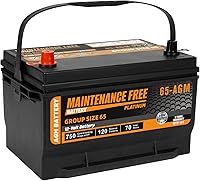
AGM batteries are sealed lead-acid cells with the acid absorbed in a glass mat. That construction gives them low internal resistance and strong current delivery when they are healthy.
When they age or are left discharged, internal resistance climbs and the voltage sags under load.
So the test separates three cases. A healthy AGM holds above the pass mark, a marginal one dips and slowly recovers, and a failed one drops hard and stays low.
That last result is the one that saves you from a roadside no-start. For a first look at resting voltage, our guide to how to test a car battery with a multimeter is the right starting point.
Can you load test an AGM battery without harming it?
You can load test an AGM battery without harm if the battery is fully charged and the load is brief. The load draws current for seconds, so it is a stress check, not a discharge cycle.
The caution is about how the battery is treated before and after. A deeply discharged AGM should be recharged first, because a load test on an empty battery tells you little and adds wear.
Repeated back-to-back tests also heat the plates for no benefit.
Let the battery rest after charging so its surface charge settles. Then run one test and stop.
If the result is unclear, recharge and repeat once rather than testing in a loop. Healthy AGM batteries tolerate this short load without measurable damage.
How do you run a load test on an AGM battery?
Charge the battery, connect the tester with correct polarity, apply the load for the specified time, and read the meter. The steps below apply to a 12V AGM in a car, truck, RV or boat.
- Charge the AGM fully and let it rest so the surface charge dissipates.
- Turn off the engine and any accessories that draw power.
- Connect the positive clamp first, then the negative clamp to the battery terminal.
- Set the tester to the 12V load setting and apply the load for the seconds the tester specifies.
- Watch the voltage while the load is applied and again just after you release it.
- Compare the reading with the pass mark for the battery's rating.
Clean terminals make a difference, because a corroded connection adds resistance that looks like a weak battery. A digital tester also asks for the battery's rated Cold Cranking Amps, so it can scale the test correctly.
Have that figure ready before you start.
Which tester suits a home garage?
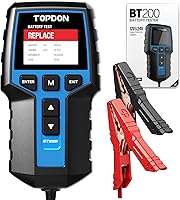
The Foxwell BT705 is the strongest pick for most home garages because it covers 12V and 24V systems across 100–2000 CCA and handles AGM, GEL, EFB and flooded batteries. It shows test results as GOOD, RECHARGE or REPLACE, which takes the guesswork out of reading the numbers.
Its 5.9 ft cable reaches from the battery to the driver's seat, so you can watch cranking voltage alone. That matters on AGM batteries, where a slow crank often shows up before a resting voltage test fails.
Our roundup of the best battery load testers compares it with the analog options.
Who should choose the Schumacher BT-100?
Choose the Schumacher BT-100 if you want a simple analog load test with no settings to learn. Its top-mounted rocker switch and analog meter show the voltage drop as it happens.
It runs three checks in one unit: battery health, charging system and starter draw. It handles 6V and 12V batteries up to 1,000 CA and covers cars, motorcycles, ATVs, lawn tractors, boats and RVs.
Its steel case and rubber handle suit a garage bench.
An analog needle gives you a live view of how fast the voltage falls, which some people prefer to a screen. It doesn't name AGM as a type or give a replace verdict, so you compare the needle against the pass mark yourself.
Who should choose the QWORK 24338?
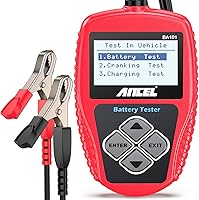
Choose the QWORK 24338 if you want a low-cost analog tester with an alternator check. It tests 6V and 12V batteries up to 1,000 CCA and adds an alternator testing function.
Its shock-resistant steel case and heavy-duty copper-plated clamps suit repeated use. The handle and compact size make it easy to store between jobs.
It fits cars, trucks, RVs and golf carts.
The same analog limits apply: no AGM type setting and no automatic verdict. It suits a buyer who wants a spare tester for a golf cart or second vehicle and is comfortable comparing voltage against a spec.
How do you read AGM load test results?
Read the voltage under load against the battery's rated spec, then judge how well it recovers. A 12V AGM should stay above roughly 9.6 volts during a proper load test at its rated draw.
A healthy AGM stays near or above that mark and snaps back toward 12.4 volts or more within seconds of releasing the load. A marginal one dips below the mark and recovers slowly, which often means it is near the end of its service life.
A failed one collapses and stays low even after a rest.
Don't read one number in isolation. Compare the result with the battery's age and how it has been used.
An AGM kept at partial charge for months will test weak even if it can recover with a proper recharge. A battery that tests weak twice after a full charge is telling you something.
Why does an AGM battery fail a load test?
An AGM battery usually fails a load test because its internal resistance has risen, and that rise comes from sulfation, age or chronic undercharging. AGM cells are sealed, so you can't check or top up the acid.
Sulfation is the big one. When an AGM sits at partial charge, lead sulfate hardens on the plates and reduces the surface available to deliver current.
The battery still reads a normal resting voltage but sags under load.
Chronic undercharging is common in cars that make short trips. The alternator never gets long enough to fully recharge the AGM, so it lives at 70 or 80 percent charge and sulfates faster.
A load test catches the result before it strands you. A jump start might get you moving, so know can you jump start an AGM battery safely, but it won't fix a failing cell.
When should you replace an AGM battery after a load test?
Replace the AGM when it fails the load test twice after a full recharge, or when it drops below the pass mark and recovers slowly. One weak result after a partial charge is not enough to condemn it.
Also replace it if it won't hold a charge overnight or if the cranking voltage sags every morning. An AGM that needs a jump start more than once in a season is on its way out.
A battery that fails a load test and is more than four or five years old is usually not worth a recovery attempt.
If you do replace it, don't put the old battery in the trash. Lead-acid batteries are recycled almost completely, and our guide to how to recycle a car battery covers drop-off options near you.
What else should you check on an AGM battery?
Check the charging system and the resting voltage alongside the load test, because a healthy battery can fail in service if the alternator undercharges it. A load test tells you about the battery, not the charging system.
Measure resting voltage after the battery sits for a few hours with no load. A fully charged 12V AGM should rest around 12.8 volts.
Then check charging voltage with the engine running; a reading in the low 14s is typical for AGM charging, though the exact target depends on the vehicle and battery maker.
Look at the terminals and case too. Loose or corroded terminals mimic a weak battery, and a bulging or leaking AGM case means replacement regardless of the load result.
AGM batteries are sealed, so any physical swelling or leakage is a stop sign.
Conclusion
Can you load test an AGM battery? Yes, and it is the check that resting voltage cannot replace.
Charge it fully, apply a brief load, read the voltage against the battery's rating, and replace it if it fails twice. For most home garages the Foxwell BT705 is the pick because it names AGM as a supported type and gives a plain GOOD, RECHARGE or REPLACE verdict.
Choose the Schumacher BT-100 for a simple analog needle, or the QWORK 24338 for a compact backup tester with an alternator check. If the test points to a new battery, our guide to how to recycle a car battery handles the old one.
Frequently asked questions
Can you load test an AGM battery the same way as a flooded battery?
The test procedure is the same, but AGM batteries hold voltage differently. A healthy AGM recovers quickly and stays above the pass mark under load.
Use an AGM-specific or automatic setting and compare the result with the battery's rated Cold Cranking Amps.
Does load testing damage an AGM battery?
No, if the load is short and the battery is already charged. A load test draws power for seconds, not minutes.
Repeatedly testing a deeply discharged AGM does add wear, so charge it fully first and avoid back-to-back tests.
What voltage should an AGM battery hold under load?
A 12V AGM should stay above about 9.6 volts during a proper load test at its rated draw. If it sags below that mark and keeps dropping, the battery is likely failing.
Check with the tester's instructions and the battery maker's spec.